Seventeen-year-old Adéla Podholová is conducting research in a Prague laboratory, investigating how intestinal mucus affects the absorption of medicines. She is now coordinating Zvaž vědu!, a full-day event at the Technical University of Liberec where high school students give talks to their peers. On 23 October, she will take to the stage herself to present her research. How did she get into science, and why does she want to inspire other young people to follow in her footsteps?
Inside a glass tank filled with a deep layer of bedding, a hamster digs out little chambers while a young student in her second year at Doctrina, an eight-year grammar school in Liberec, carefully documents what the animal does in them. Her observations will eventually become a presentation at a junior scientific conference organised by the Faculty of Science at Charles University.
“I won the conference, and I also discovered that I absolutely loved not just doing research, but talking about science too,” Adéla Podholová recalls. She returned to the conference every year, and in her fifth year at grammar school, she presented the results of her first biological experiment.
She ordered Petri dishes online, bought agar at a supermarket and used a cotton swab to spread bacterial samples collected from her fridge. She then placed garlic, honey or ginger in the centre of each dish. The bacteria multiplied everywhere except within a one-centimetre zone around these substances.
“At fifteen, it felt like I'd discovered a cure for cancer. I was completely blown away,” Adéla says.
An invitation to the laboratory
Her experiment was a success and caught the attention of the Neuron Foundation. The foundation offered her the opportunity to experience real scientific research and connected her with Professor František Štěpánek's Chemical Robotics Laboratory at the University of Chemistry and Technology in Prague.
There, she learned that the laboratory had not worked with garlic for ten years. Instead, the researchers offered her a different topic: drug absorption in the small intestine. Adéla even moved to Prague for the summer to work on the project, spending every day in the laboratory.
“The small intestine is lined with mucus containing substances called mucins, which bind water and other molecules. I'm investigating how medicines are absorbed through this mucus. And because nobody had studied this particular problem before, I had to develop my own screening method that allows me to test large numbers of samples quickly. It took hours and hours of work, and I ran into plenty of dead ends,” Adéla admits.
In 2026, her project won the national round of Expo Science AMAVET, a competition for high school students. In May, she represented Czechia at the international finals of Regeneron ISEF, the world's largest international science competition for high school students, held in Phoenix, Arizona.
And that is far from her only achievement. She came second in FameLab Czech Republic Academy 2026, a science communication competition. She was also among the first recipients of the new EDUCA AWARDS in the Liberec Region, recognising exceptional high school students. In 2025, UNICEF presented her with the Child of Czechia Award for her involvement in science, culture and student government.
By high school students, for high school students
Adéla is no stranger to student government. She holds leadership roles in both her school's student council and the regional student parliament. The organisation Zvaž vědu!, which she joined, operates on a similar principle.
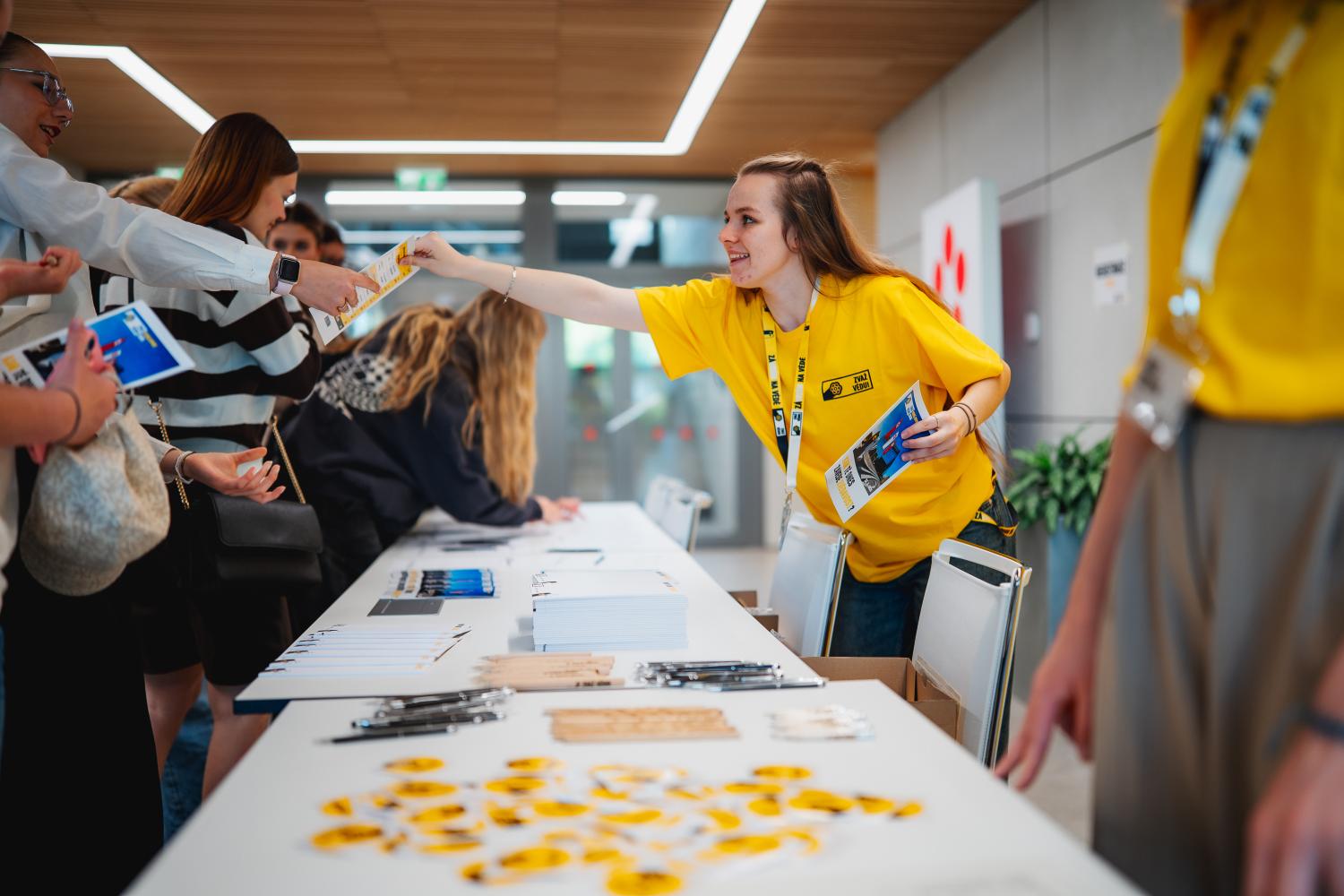
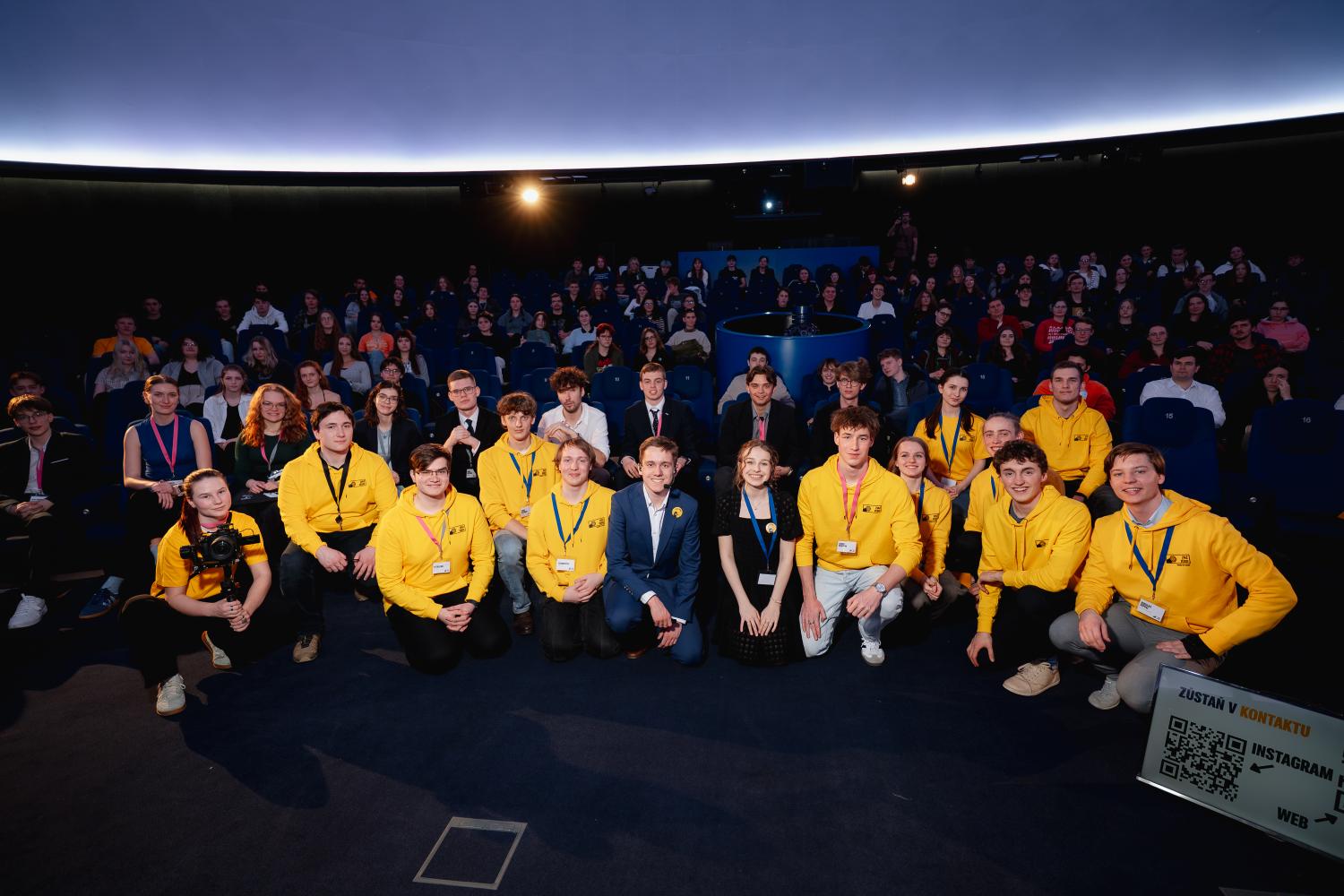
Founded in Pilsen in 2023 by a group of participants in physics camps, the organisation is still run entirely by students. Since its first event at the University of West Bohemia, it has expanded to Brno, České Budějovice and Prague. Its events have attracted more than 2,100 participants from nearly 200 primary and secondary schools. Now, Zvaž vědu! is coming to Liberec for the first time.
“In our talks, we discuss our own research and how we got into it. We share which activities helped us along the way, as well as what didn't work out. Afterwards, audience members can come and ask us for advice, and we help point them in the right direction,” Adéla explains.
She adds: “Younger speakers receive presentation training from fellow high school students, including two-time winners of Prezentiáda, a public speaking competition. We teach them how to explain things simply, so that everyone can understand what they're working on. At the same time, we want to show the public that we're not the snowflake generation, as we're so often labelled. We're capable young people who can make a real contribution to science,” says the coordinator of the Liberec event.
Zvaž vědu!
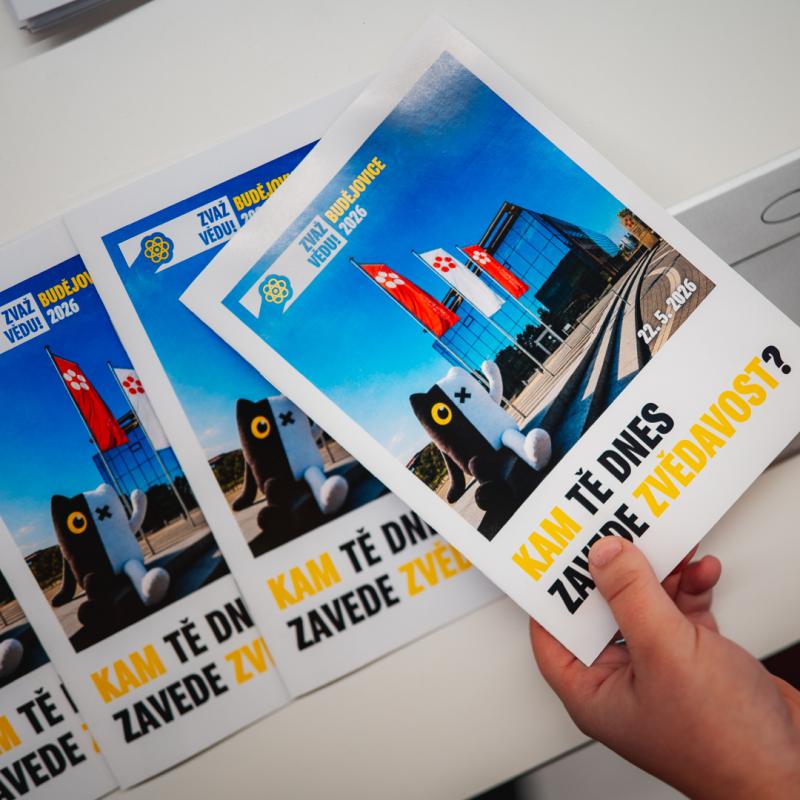
The event takes place on Friday, 23 October 2026, from 9:00 a.m. to 3:00 p.m. at the Technical University of Liberec. Admission is free.
Join us at Zvaž vědu! Liberec
Visitors can look forward to ten talks delivered in 30-minute sessions, covering topics ranging from physics (“Relativity in Numbers”) and ecology (“When a Lunar Landscape Becomes Nature's Laboratory”) to engineering (“SpaceX in the Garage”).
Adéla Podholová, who will present a talk entitled “How Mucins Retain Drugs”, adds:
“We want to motivate high school students to get involved in science. It's not some distant world they can only observe from their school desks. They really can start doing their own research, whether at home or at a research institution.”