Scientists at CXI TUL are developing laser systems that can adjust themselves without manual intervention from a technician. The laser can be set precisely as needed and can use sound to detect whether the process is running correctly. Research within the LasApp project is aimed both at space applications and at everyday manufacturing.
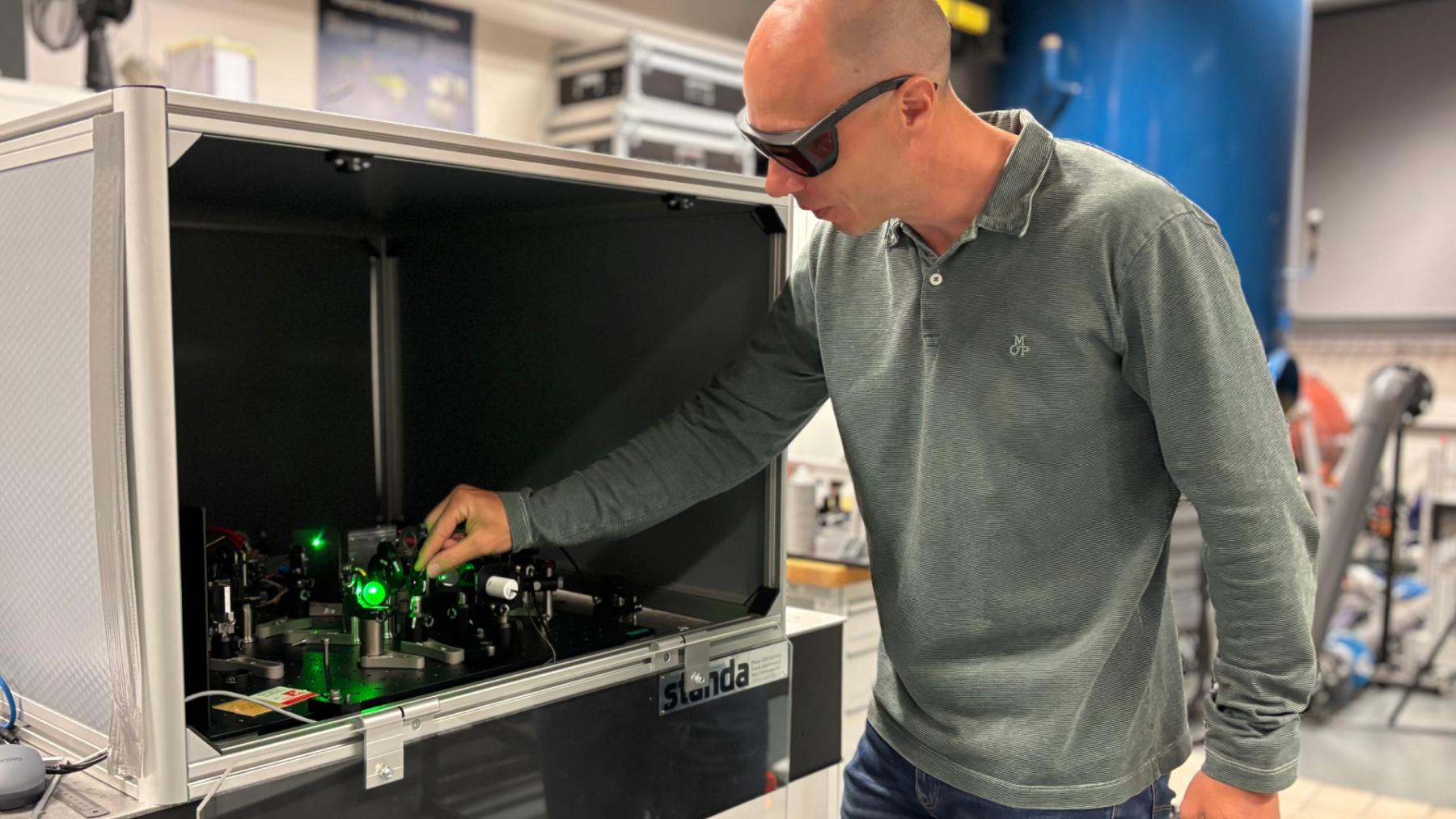
Adjusting a laser is delicate work. If a mirror shifts by even a fraction of a millimetre, the entire system can stop working. Today, this step is carried out manually by a technician, repeatedly and according to the specific situation. Teams from CXI TUL, however, are working on a system that would allow the laser to take care of this itself.
A misaligned laser? That is no small thing
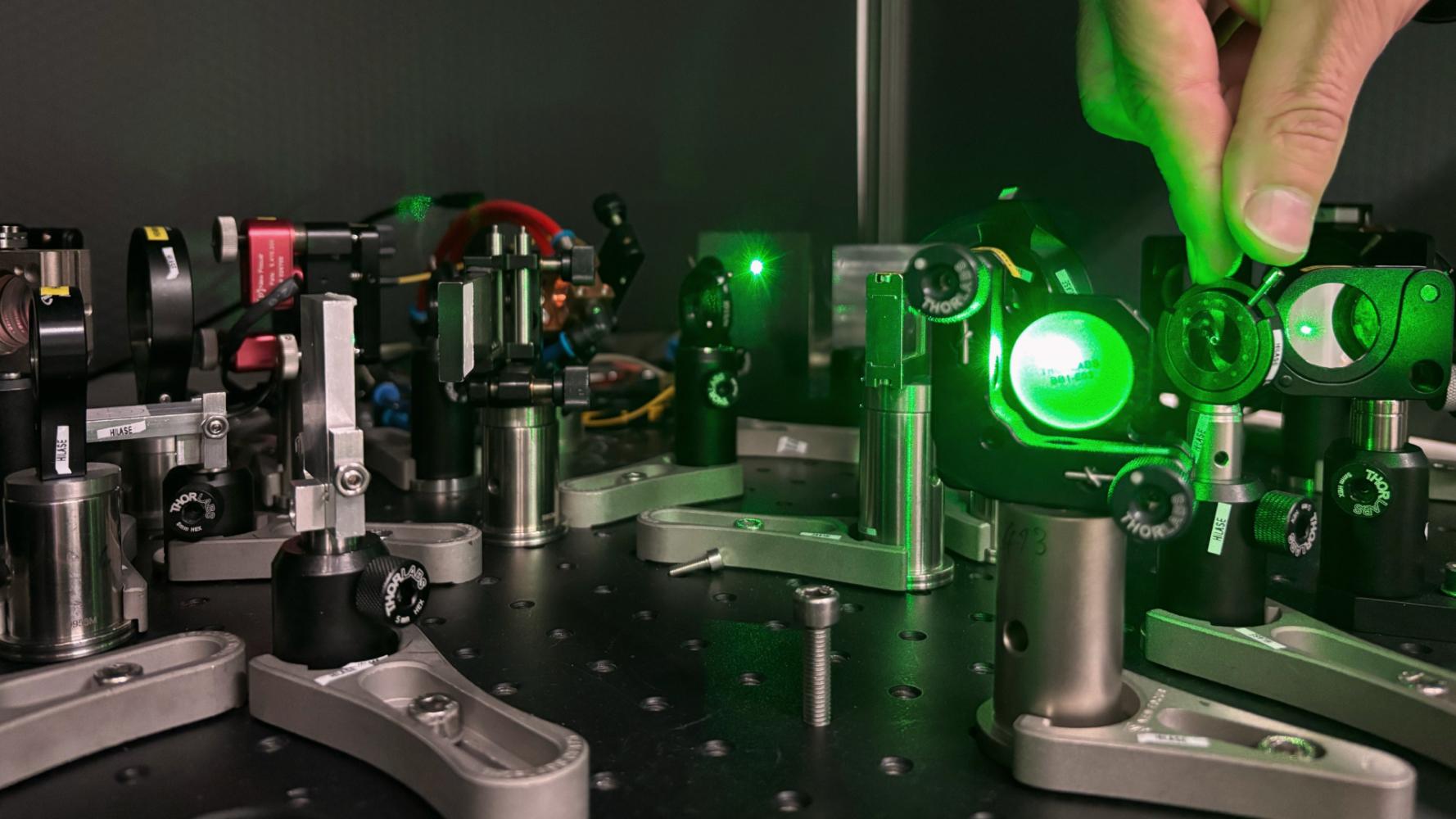
At the heart of the device is the laser cavity, the place where the beam is generated, repeatedly reflected, and amplified. The mirrors must remain in position with micrometre-level precision. Over time, however, they drift out of alignment. Temperature, vibrations, and normal operation all play a role.
The CXI TUL team is testing a system that adjusts the position of the mirrors using piezoelectric motors: small but extremely precise actuators. The laser monitors where its own beam lands using a sensitive sensor. If the beam deviates from the correct position, the system detects the shift and corrects it automatically.
At the current stage, the system achieves precision in the range of tenths of a micrometre. For comparison, a human hair is around 70 micrometres thick.
AI brings the laser back into its optimal position
Detecting an error is one thing. Fixing it quickly and efficiently is another. That is why the team is testing machine learning methods that learn how to guide the mirrors back into the correct position as quickly as possible and with as few movements as possible.
The goal is clear: to place the laser beam precisely in the centre of the sensor, with accuracy below three micrometres. In May 2026, a new IR viewer was added to the laboratory, allowing researchers to observe the infrared trace of the laser directly inside the system. This helps them set the optical path more accurately and prepare the laser for full-scale testing.
Why does this matter? In places where it is not possible to send a technician for servicing, such as in space, a laser must be able to repair itself.
When errors can be heard
While the first part of the research looks towards space, the second is aimed at industry, where it may deliver concrete practical applications. The team is focusing on a technology called laser peening. This is a laser-based surface treatment of materials, used for example in aerospace or automotive components.
Each laser pulse produces its own sound signature. When the process is running correctly, the sound differs from the sound produced when something goes wrong. The researchers collected more than 21,000 short audio recordings and analysed them all.
On this basis, they developed their own application, which can display and compare signals in both the time and frequency domains. It can then distinguish a correct pulse from a faulty one. The development was supported by XGBoost, a widely used machine learning tool for classification.
The result: 93 percent accuracy. This means that a machine can monitor production quality in real time, based solely on how the process sounds, without the need to inspect every part under a microscope.
The combination of lasers, AI, and smart diagnostics is unique
All of this is part of the LasApp project, which connects leading laser centres of the Czech Academy of Sciences with other research institutions. The project is coordinated by the Institute of Photonics and Electronics of the Czech Academy of Sciences. Other partners include the Institute of Physics of the Czech Academy of Sciences – HiLASE Centre, the Faculty of Science of Charles University – BIOCEV Centre, the Institute of Scientific Instruments of the Czech Academy of Sciences, and two top research centres from the Liberec Region: the Institute for Nanomaterials, Advanced Technologies and Innovation at TUL, together with the Institute of Plasma Physics of the Czech Academy of Sciences – TOPTEC Centre.
Six institutions, one goal: to bring laser technologies closer to smart manufacturing and future space missions. Research within the LasApp project brings together optics, automation, artificial intelligence, and diagnostics of manufacturing processes into a single whole.
And when something goes wrong one day, there may be no need to send a technician deep inside the device like a hero entering the dark corridors of a spaceship, where the Alien might be lurking. Thanks to research at CXI TUL, a laser that can adjust itself and recognise in time that something is not going according to plan may prevent similar drama before things get serious.