
Instria: From conventional sensor technology to printed sensors and its own robot
July 23, 2026
4 minutes

Instria, a company based in Liberec, shows how traditional technical know-how can gradually be transformed into a business capable of responding to the current needs of industry and the energy sector. What path led the company into the field of printed sensors? And why does this technology have the potential to transform how machinery and structures are monitored in industrial environments?
Until recently, Instria focused on the development and production of measurement systems in Rozstání, a small village at the foot of Mount Ještěd. Almost in the shadow of its iconic television tower, the company developed sensors for combustion engines, energy equipment and other industrial applications. Despite its small team, Instria succeeded in establishing partnerships with major customers in the engineering and energy sectors.
“Our sensors are used on ocean-going vessels, and for Formula 1, for example, we installed them directly onto the pistons of combustion engines,” says company founder Jan Vyštejn. At the same time, however, he points out that Instria was encountering the structural limitations of conventional sensors.
“With existing sensor technology, the housing accounts for 95% of the sensor’s volume and weight. It protects the sensor and allows it to be installed, but this becomes a fundamental problem when you want to integrate sensors directly into equipment or measure physical quantities in hard-to-reach locations or on moving components,” Vyštejn explains.
This was reflected primarily in the time and cost required for production, as well as in the inability to scale it, since each sensor had to be assembled individually. As a result, the sensors were better suited to one-off measurements or development purposes than to routine operation.
Why not simply print them?
The team of experts found the solution in printed electronics technology. This involves applying extremely thin sensors using conductive nano-inks, allowing them to be integrated directly onto complex surfaces of machine components.
Instria’s founder describes the process: “Everything is carried out using robots, 3D scanning and lasers. We also use our own patented technology to protect the sensors from mechanical damage. This allows us to automate production to a large extent, paving the way for deployment in larger series and directly on production lines.”
Printed sensors can be used in locations that conventional sensors cannot reach. Potential applications include monitoring deformation in aircraft structures and measuring the temperature of battery cells. But the possibilities do not end there. “We have prepared a pilot project to print sensors directly onto welds. Instead of costly inspections, the condition of the structure could then be monitored automatically,” says Vyštejn.

Business realities and the road ahead
The transition from conventional to printed sensor technology marked a fundamental change in Instria’s approach to business. “We were operating successfully, but progressing slowly. The decisive impetus to focus on new technologies came from the three-month Výkop mentoring programme run by the Lipo.ink business incubator,” the company’s founder explains.
In 2024, Instria moved into production premises in Liberec’s Dolní Hanychov district and has invested significantly in development over the past year. According to Vyštejn, the new technology has promising commercial potential, but many companies are still reluctant to fund its further development in advance. “Everyone tells us they want practical results. There is a scale called TRL, or Technology Readiness Level, which indicates how mature a technology is. We are currently at TRL 4, meaning it has been validated in a laboratory environment. We are working on pilot projects to reach TRL 6 or 7. We expect that to open up further opportunities,” the CEO explains.
The company is also exploring funding options through European grants and venture capital. One organisation that has expressed interest is the NATO Innovation Fund, which invests in technologies related to defence, security and resilience.
“We are currently focusing on Europe, where we have good conditions for further development. Once the technology is more mature, however, we also want to expand into the United States. We already have a partner there and, in the longer term, an opportunity to apply our sensors at spaceports,” Vyštejn says, outlining the company’s prospects.
Instria’s longer-term plan is relatively specific. Within two years, the company aims to complete its pilot projects and begin printing sensors to order. Within four years, it plans to offer its own equipment, enabling customers to print the sensors themselves. “It will be a robot equipped with all the necessary printheads. The system incorporates 3D scanning, lasers and other technologies. However, it still requires a great deal of further development,” the company’s founder concludes.
Recommended articles
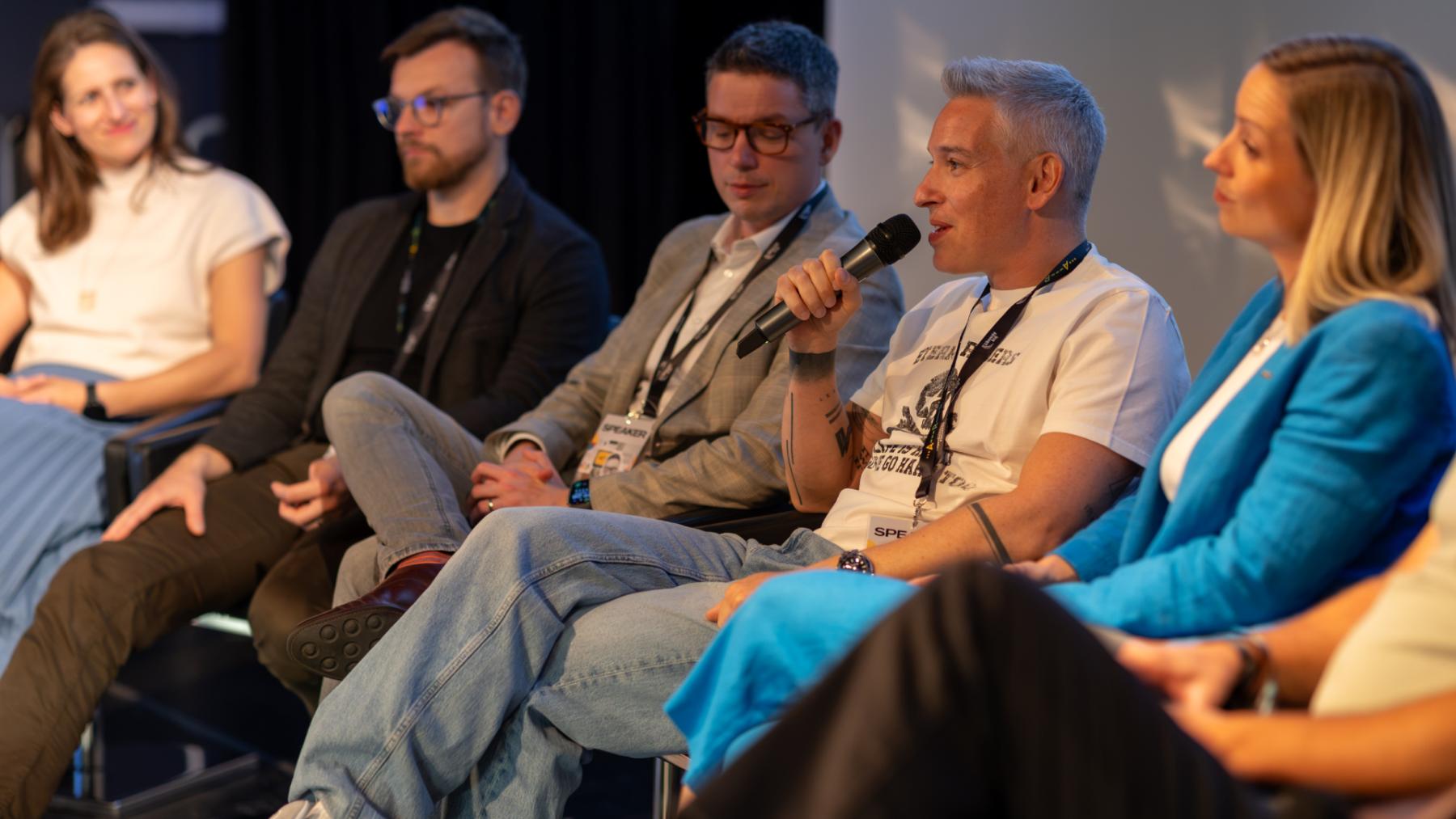
AI won't save you if you don't know what you want. Marketing Masters showed what businesses really need
Marketing is changing rapidly. New technologies, tools and ways of reaching customers are constantly emerging. But even the best of them cannot solve the problems of a business that doesn't understand its customers or struggles to align marketing with product development and sales. Finding common ground between these areas was one of the central themes of the October Marketing Masters conference, brought to the region by the Regional Development Agency and the Liberec Region.
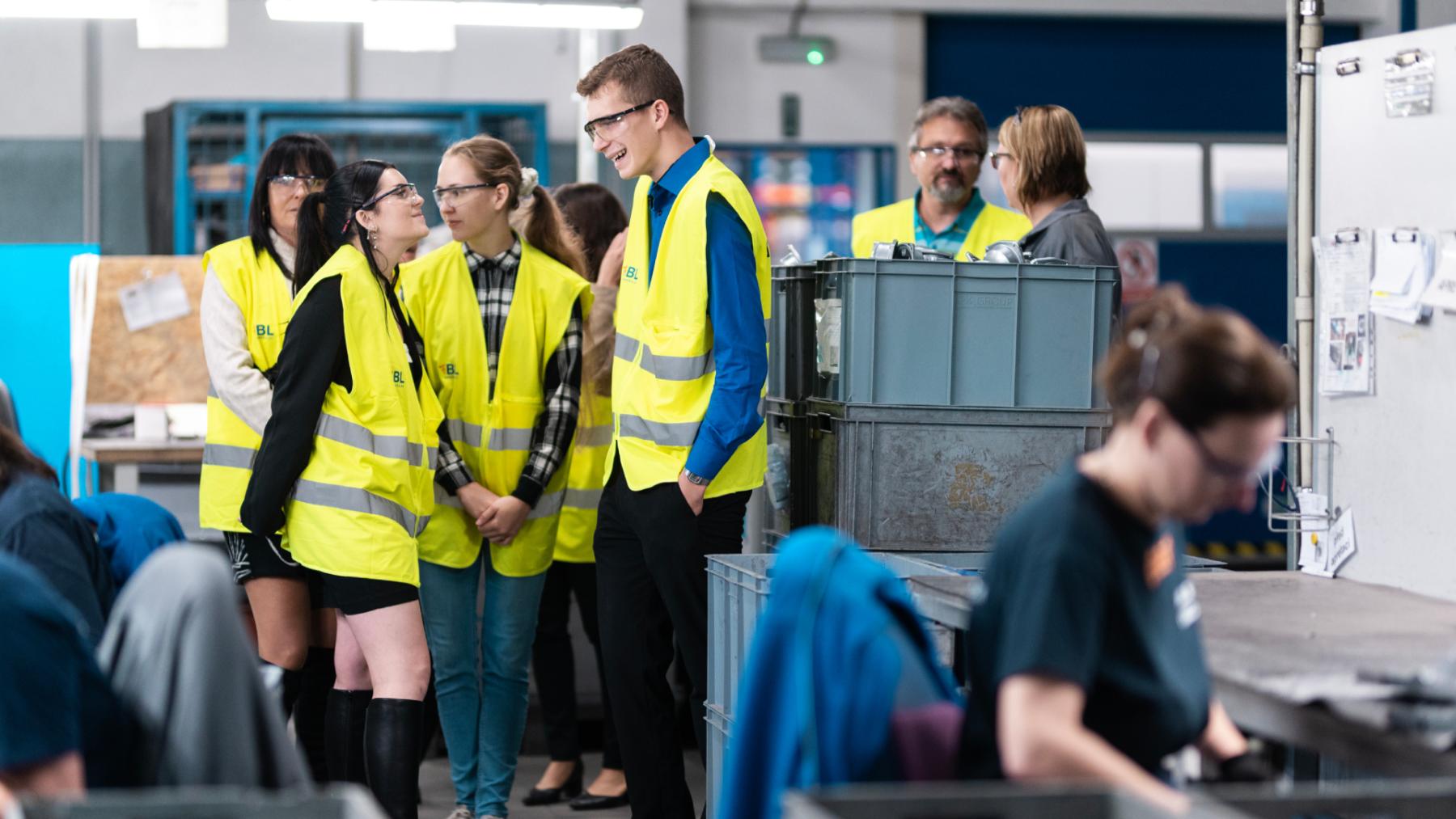
Student proposals improve manufacturing operations through TechStarter. Its third edition is launching
ZF Automotive’s Jablonec plant wants to test machine vision on an assembly line, while industrial equipment supplier FOXON plans to visualise data from electricity meters. These are just some of the challenges awaiting participants in TechStarter 2027, a competition programme organised for the third time by the Regional Development Agency and the Liberec Region. The programme gives students at secondary technical schools the opportunity to work on problems that companies are actually dealing with.
Be with us. Be part of what’s next.






The 1012plus.cz portal has been implemented within the framework of “Smart Akcelerator II Libereckého kraje” project CZ.02.2.69/0.0/0.0/18_055/0016369.
Smart Akcelerator II Libereckého kraje has been implemented by ARR s.r.o. and it has been funded using the European Union funds, the Ministry of Education, Youth and Sport of the Czech Republic and Liberec Region. © ARR spol. s r.o., U Jezu 525/4, 460 01 Liberec