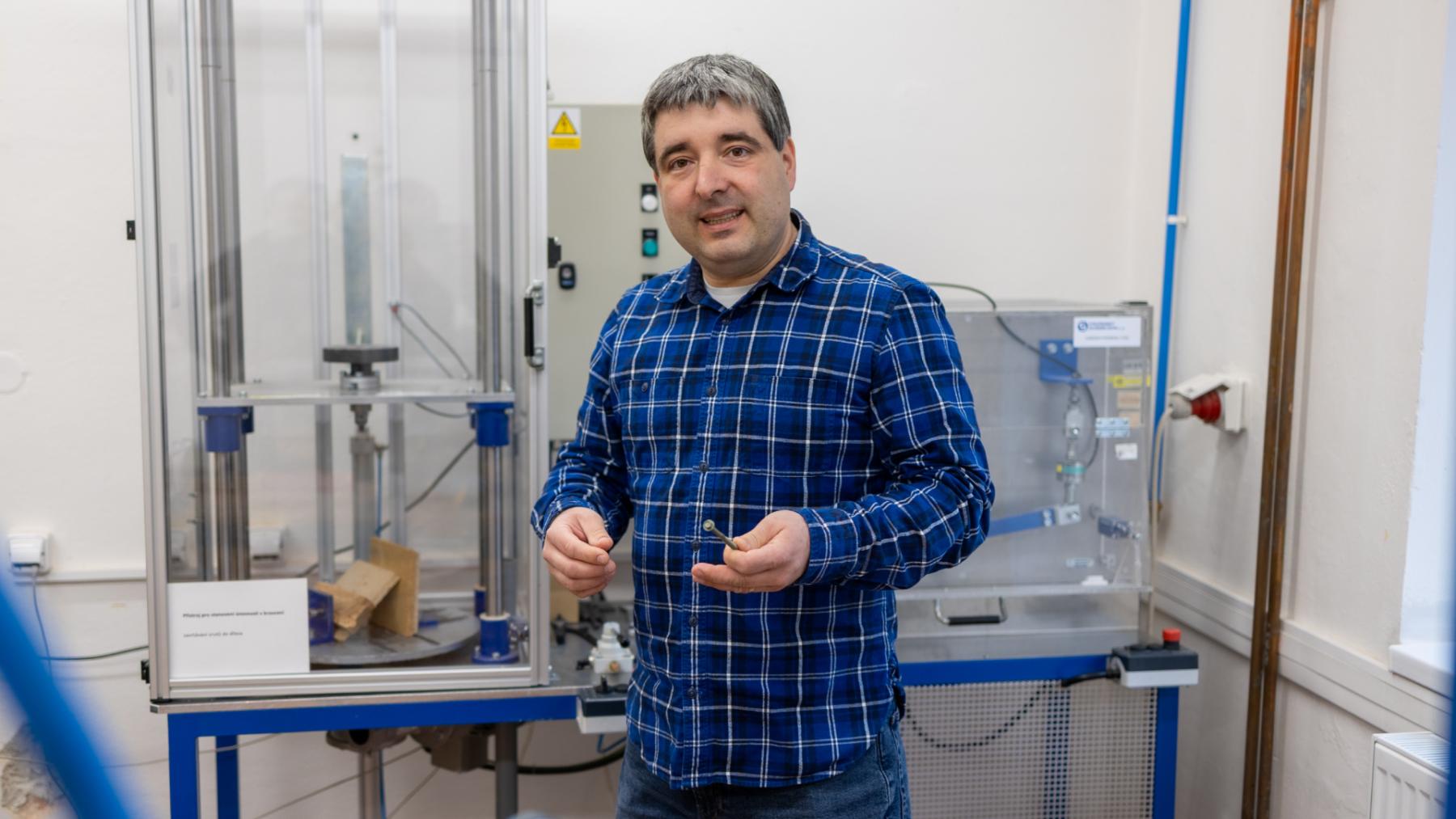
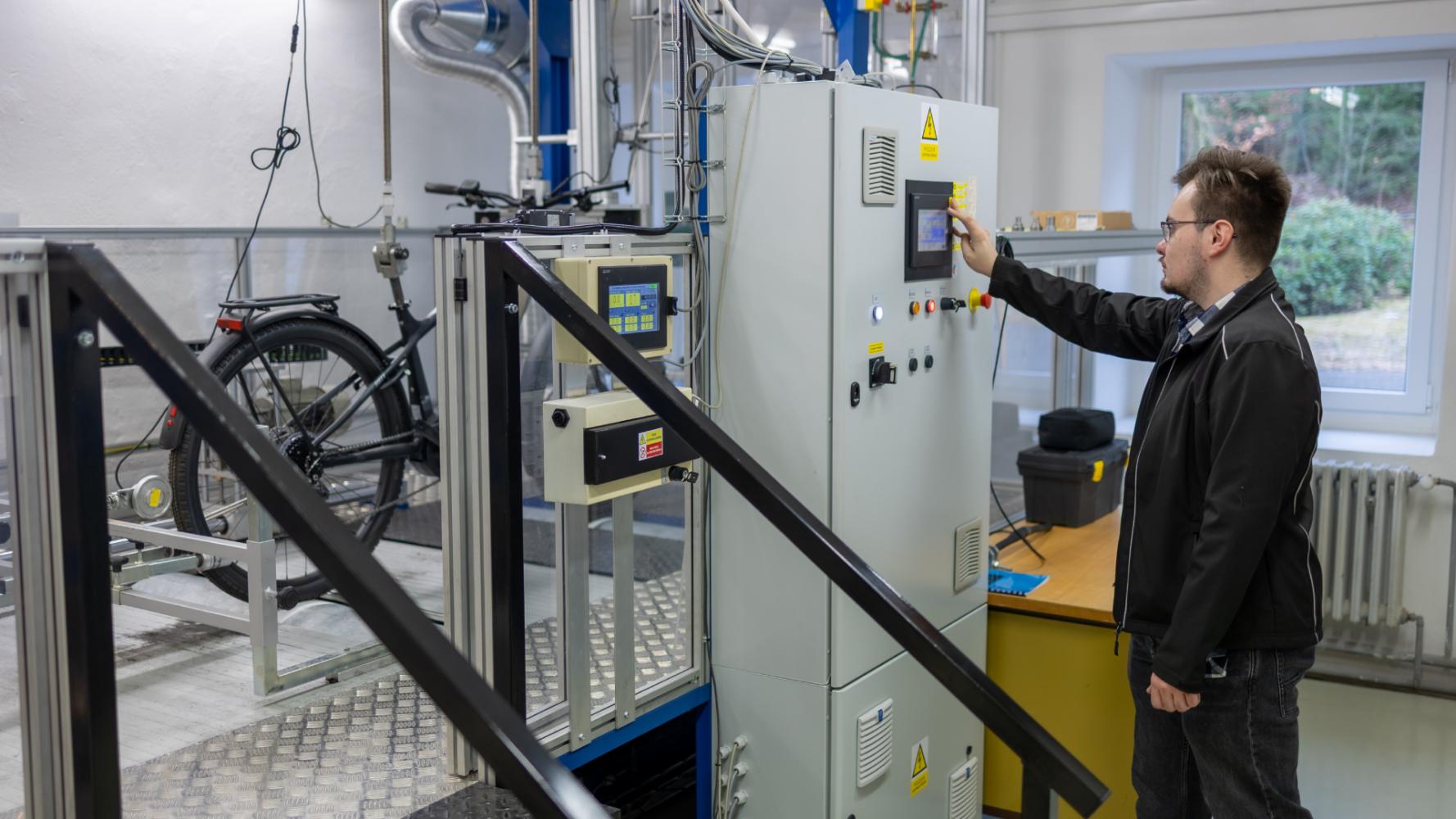
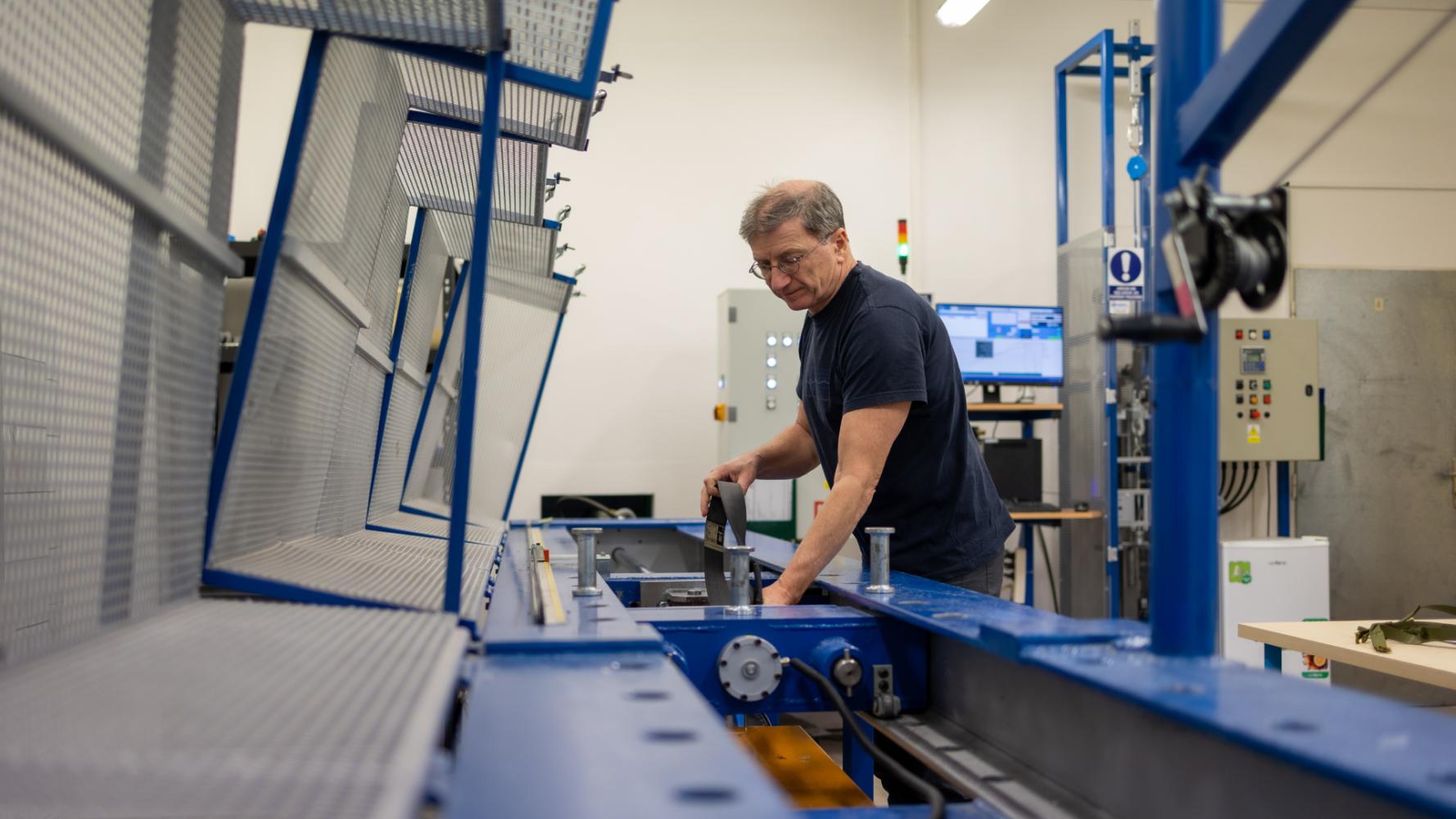
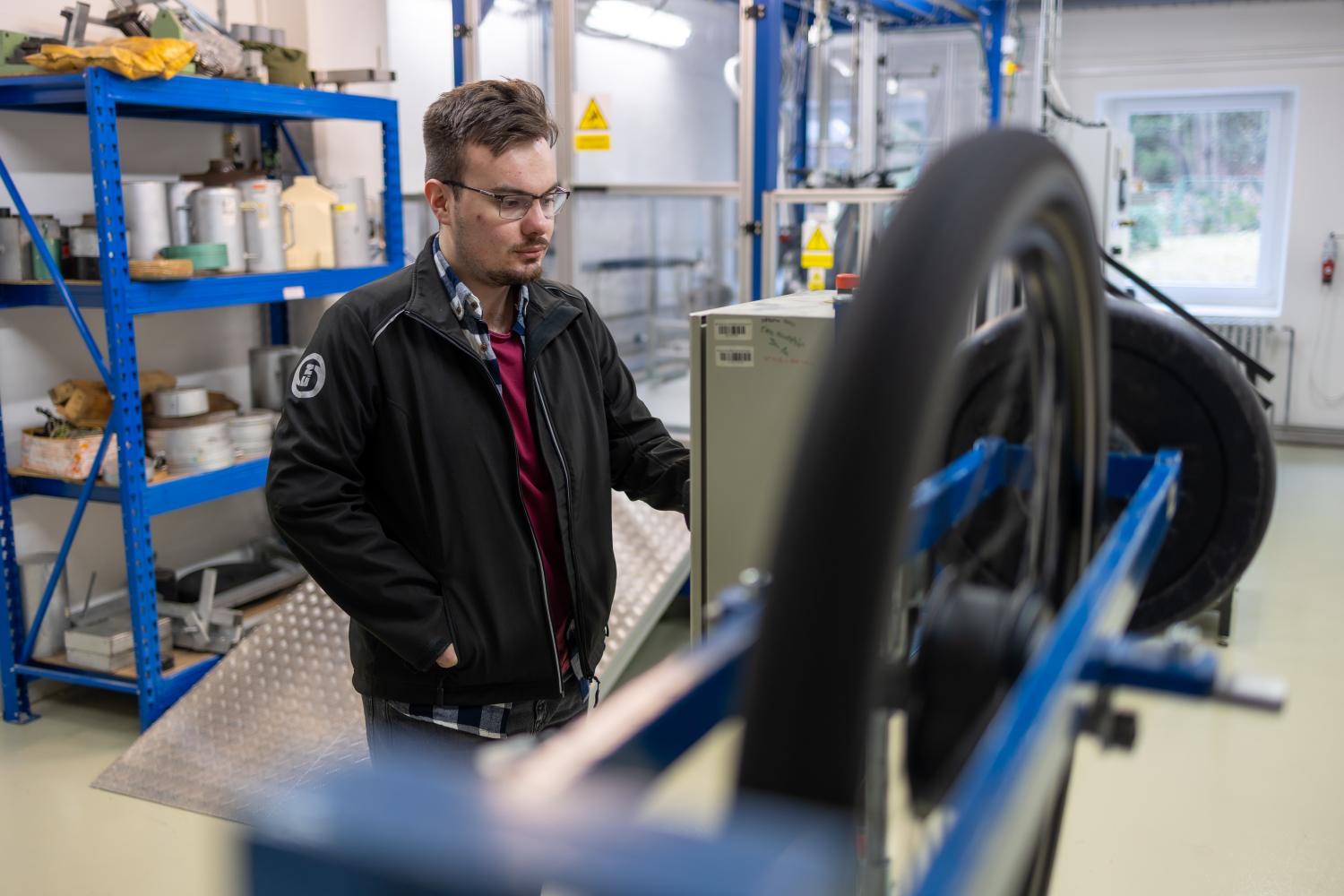
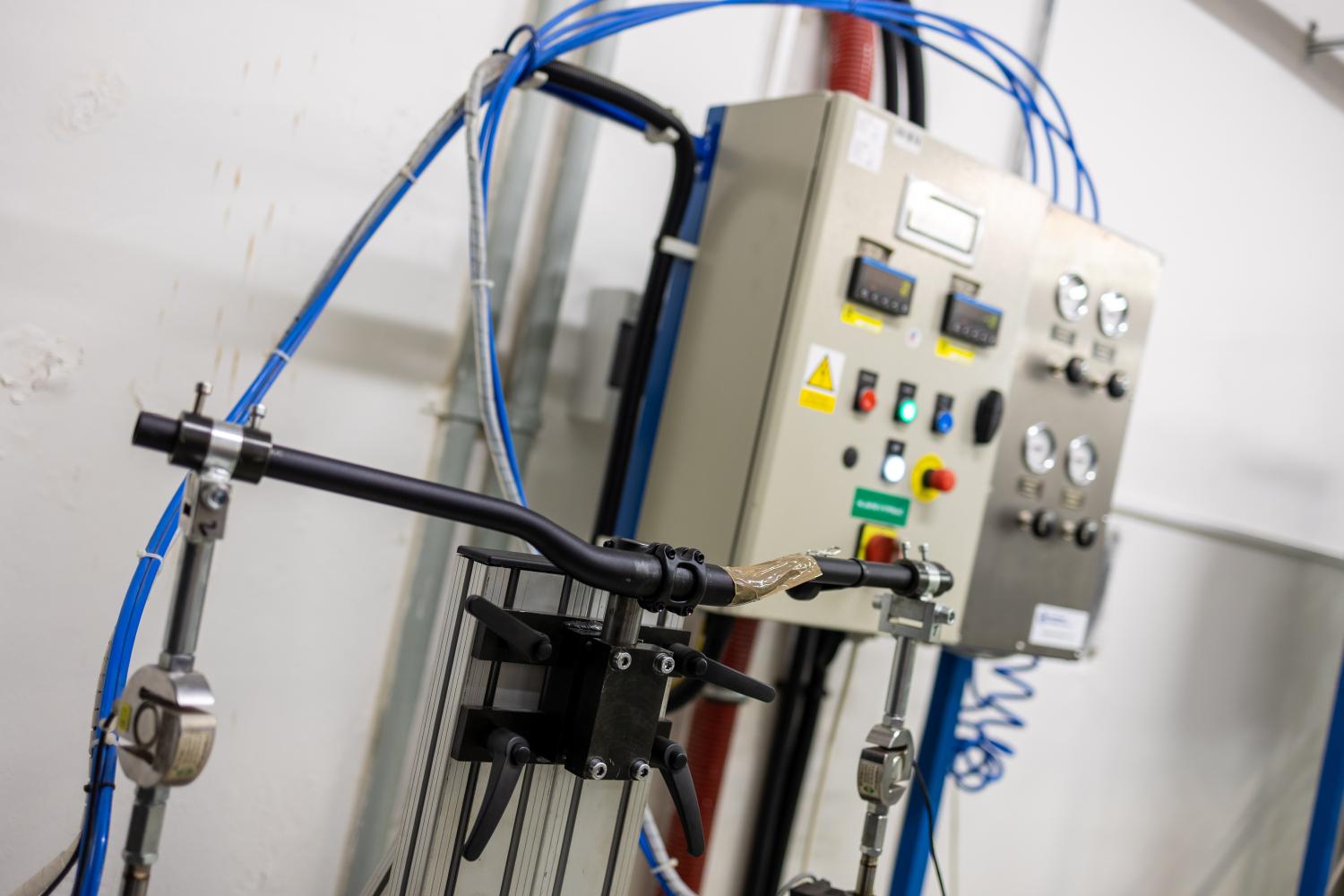
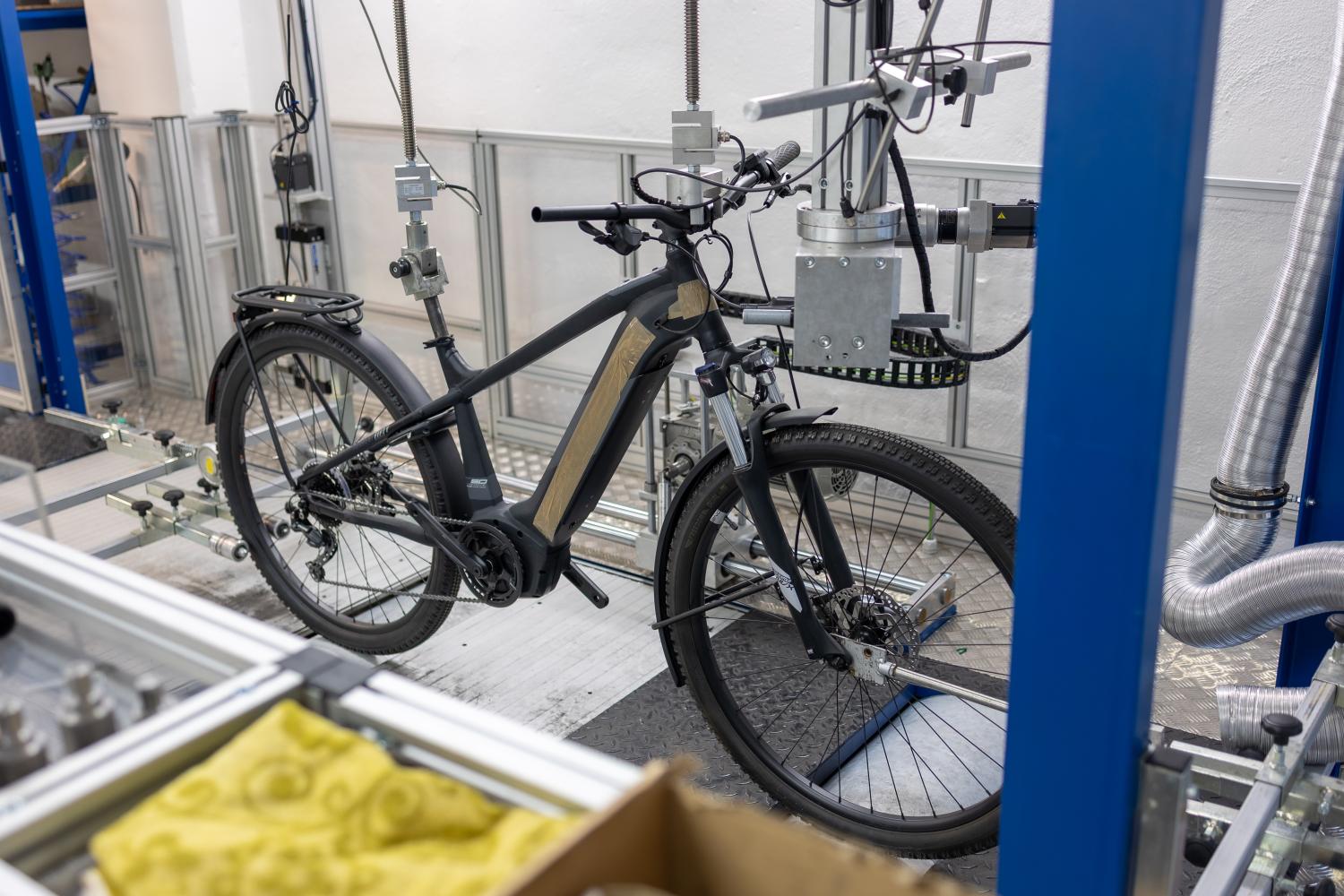
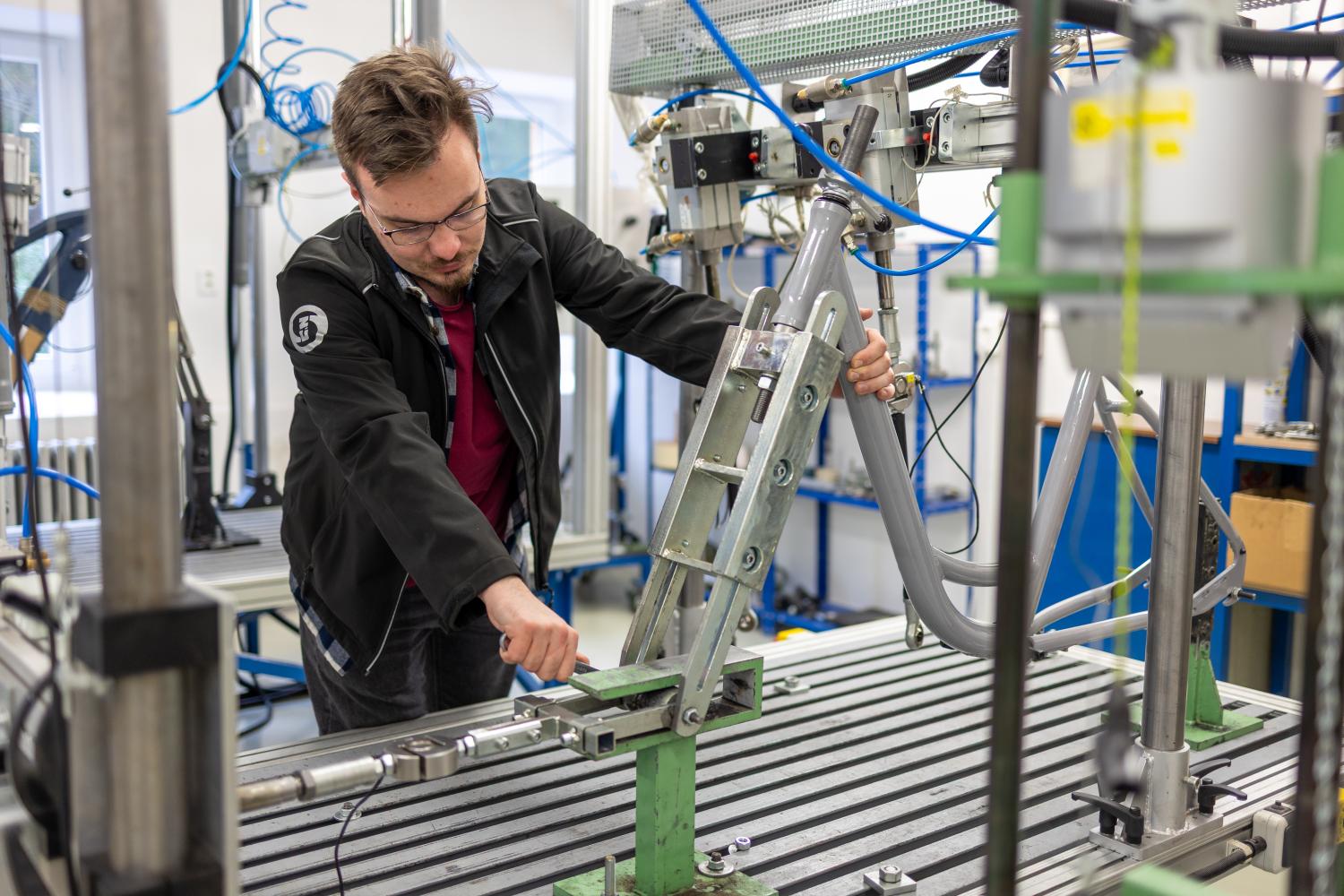
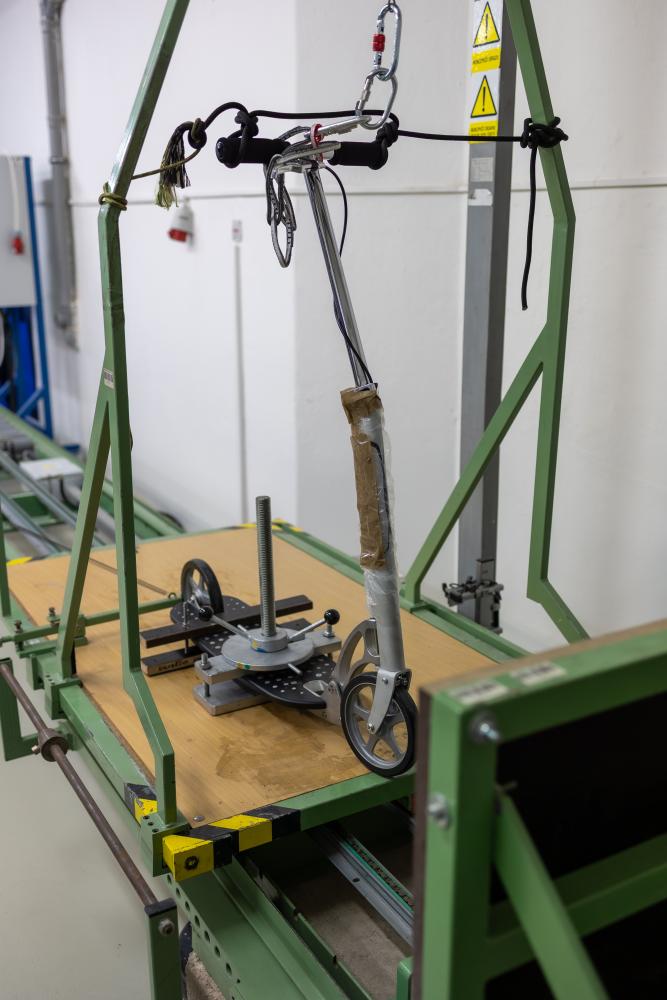
The frame of an e-bike is tensioned on a pneumatic device, handlebars are bent in a testing rig to the verge of breaking, and brakes are made to withstand a simulated downpour. This is what an ordinary day looks like at the Engineering Test Institute in Jablonec nad Nisou. It is here, too, that decisions are made on whether new products will pass the safety filter and meet the demanding requirements of the market.
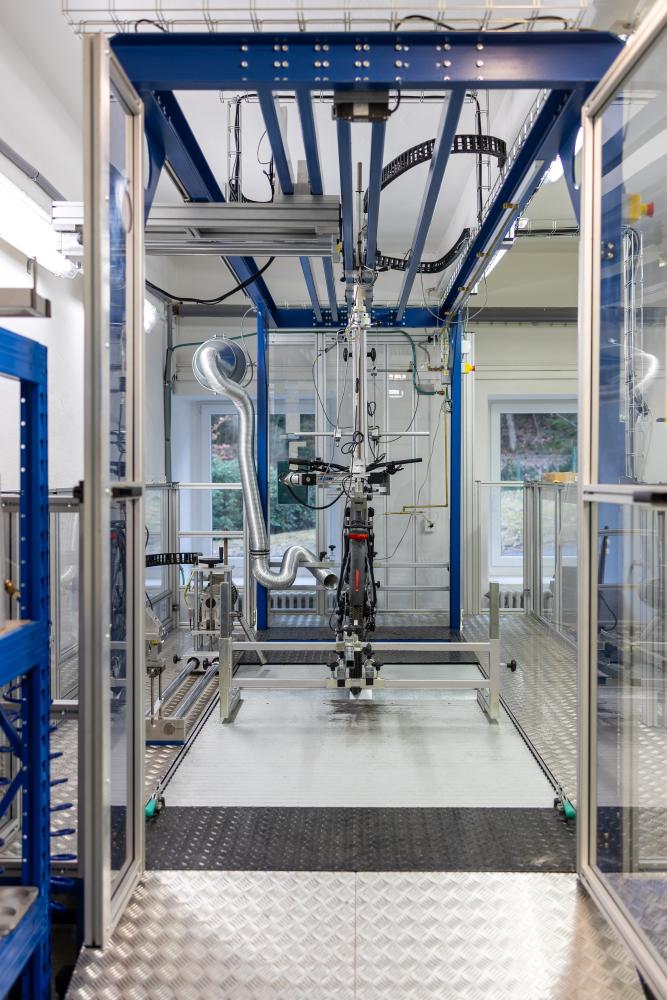
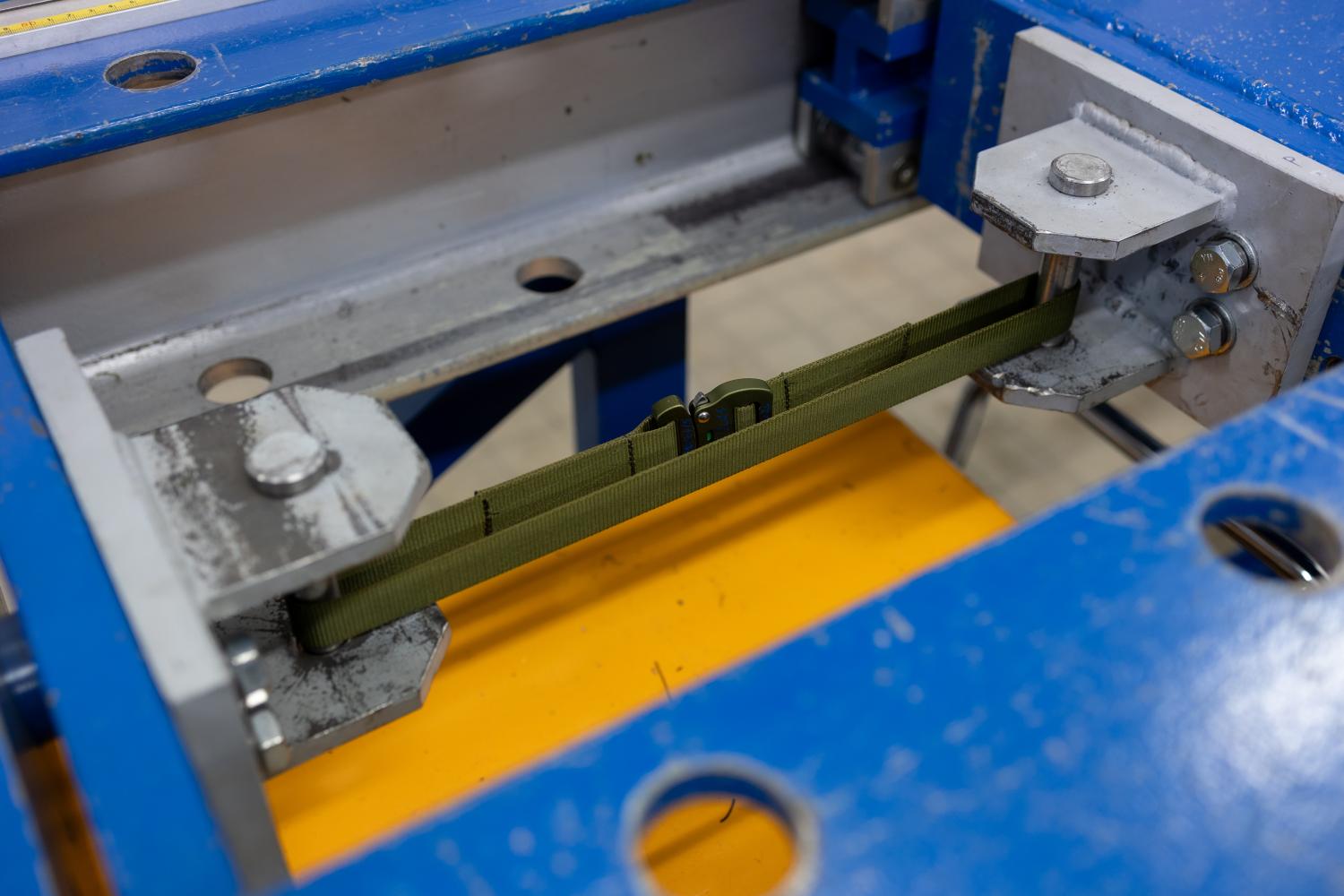
Inside the testing facility, there is a distinct mix of engineering focus and playfulness. Bicycles, e-bikes and scooters are tested on machines that the team has often designed and built themselves.
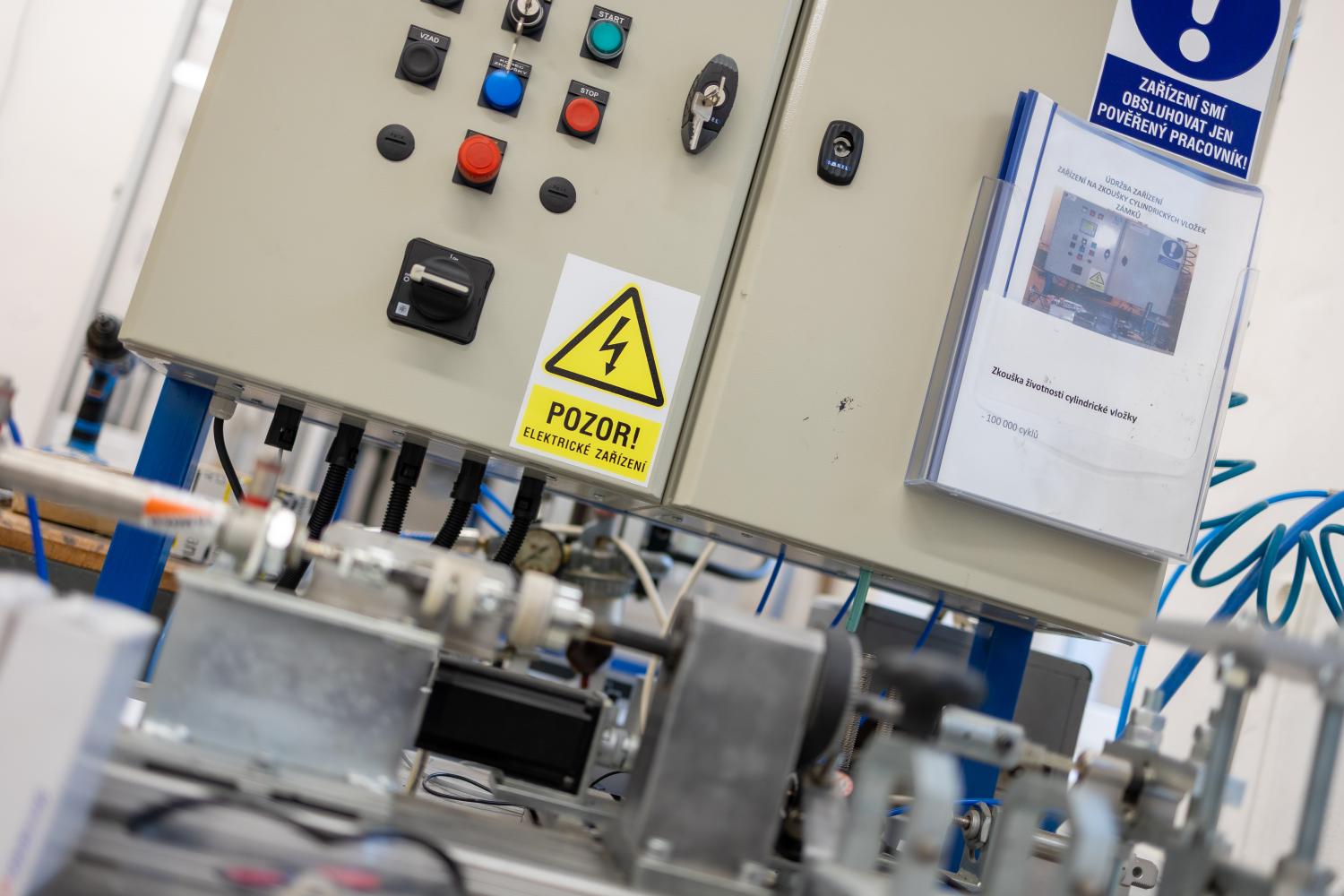
“It is not just about whether a bicycle frame can withstand stress. We monitor a whole range of parameters — braking distance in both dry and wet conditions, resistance to material fatigue, and the effectiveness of protective elements. All of this is done on equipment developed in line with legislative requirements and the specific needs of our clients,” explains Petr Matoušek, Technical Director of SZÚ’s Jablonec branch. In addition to (electro)mobility, the branch also deals with personal protective equipment, machinery, and security components such as safes, locks and fasteners.
Get to the testing lab early — ideally with a prototype
The Engineering Test Institute, whose headquarters are based in Brno, is sometimes mistaken for a research centre. In reality, it serves as a certification authority standing between an idea and the market.
“Our work is not about inventing new products, but about independently testing and certifying them. Companies turn to us when they need to verify that their solutions meet the requirements of European, and by extension Czech, legislation and specialised standards,” says the Technical Director.
European technical legislation is anything but straightforward. Large companies usually have specialised technical staff to help them navigate it. Start-ups and smaller firms, however, often cannot afford such services — and that is exactly when the Engineering Test Institute becomes a crucial partner for them.
Many companies are so intensely focused on development that they only start thinking about regulatory requirements once the product is finished — and they “just want the CE mark”. That is when problems arise.
“Some clients expect to hand over a product and have us take care of the documentation, risk analysis and declaration of conformity for them. But a certification authority must remain impartial and cannot prepare supporting documentation on behalf of anyone,” Matoušek points out.
“That is why it is important for companies to come to us early. Ideally at the concept or prototype stage. We can help them map out which requirements and standards apply to their product and tell them what they need to ensure on their side. This reduces the risk that they will have to go back and redesign a finished product. We have already seen cases where a customer underestimated the legislative requirements for the drive system, and the market launch was delayed by several months,” the Technical Director sums up.
He adds: “We compare products against safety requirements derived primarily from technical standards and regulations. As a result, in addition to the certification stamp, clients gain confidence that the product is genuinely safe and protects the health of its users.”
How do you verify what standards do not yet cover?
While competing laboratories use standardised equipment, the team in Jablonec builds many of its devices in-house. The reason is simple: market demands change rapidly, and legislation often lags behind the pace of development.
“Off-the-shelf testing machines are not enough for us. For example, when testing e-bikes, we need to simulate conditions you will not find in conventional laboratories — a combination of moisture, dust and temperature fluctuations. That is why we develop our own equipment. We also have a major competitive advantage in our proprietary software, which allows us to respond flexibly to the needs of our clients,” says the Technical Director.
As an example of ideal cooperation, he mentions the start-up Smotech. The company is behind SmonOX, a device that monitors oxygenation levels in ponds and immediately sends the collected data. Thanks to power supplied by a photovoltaic panel and a mechanical sensor-cleaning system, the device is fully autonomous.
“The company’s representatives contacted us when they had the device concept ready. We helped them verify how it would perform in terms of water tightness, power supply and endurance in demanding conditions. SmonOX was well prepared both technically and legislatively. Thanks to that, the certification process itself went smoothly and without complications,” he explains.
“The result of our cooperation was confirmation of functionality and compliance with safety requirements so that the device could be placed on the market in the Czech Republic and subsequently throughout Europe,” Petr Matoušek concludes.