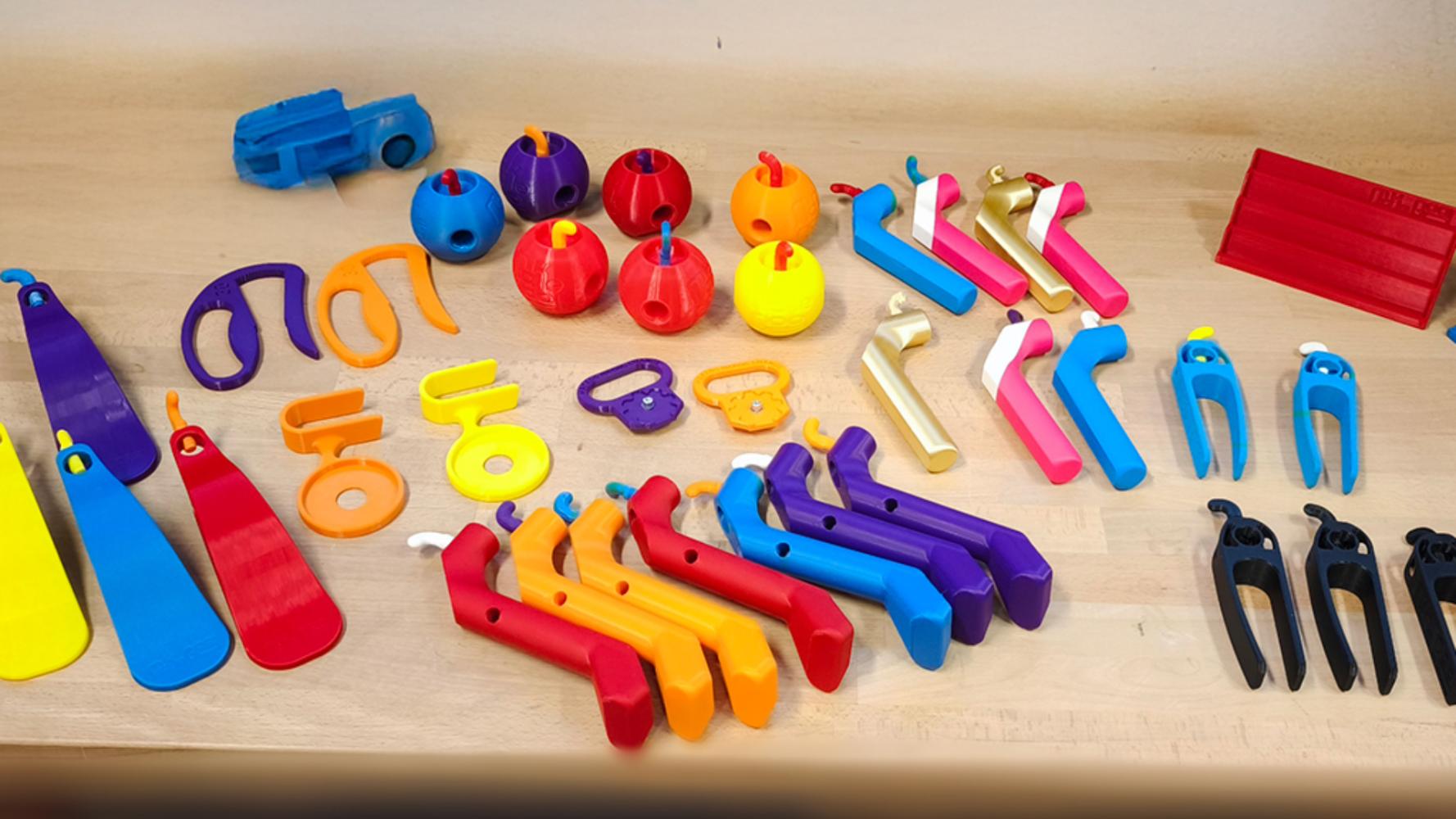
A nursery school for children with physical disabilities had long been looking for suitable aids for children who struggle with fine motor skills. It eventually found help at the Institute for Nanomaterials, Advanced Technologies and Innovation, CXI TUL. The 3D printing team designed and produced special colourful aids tailored precisely to the children’s needs.
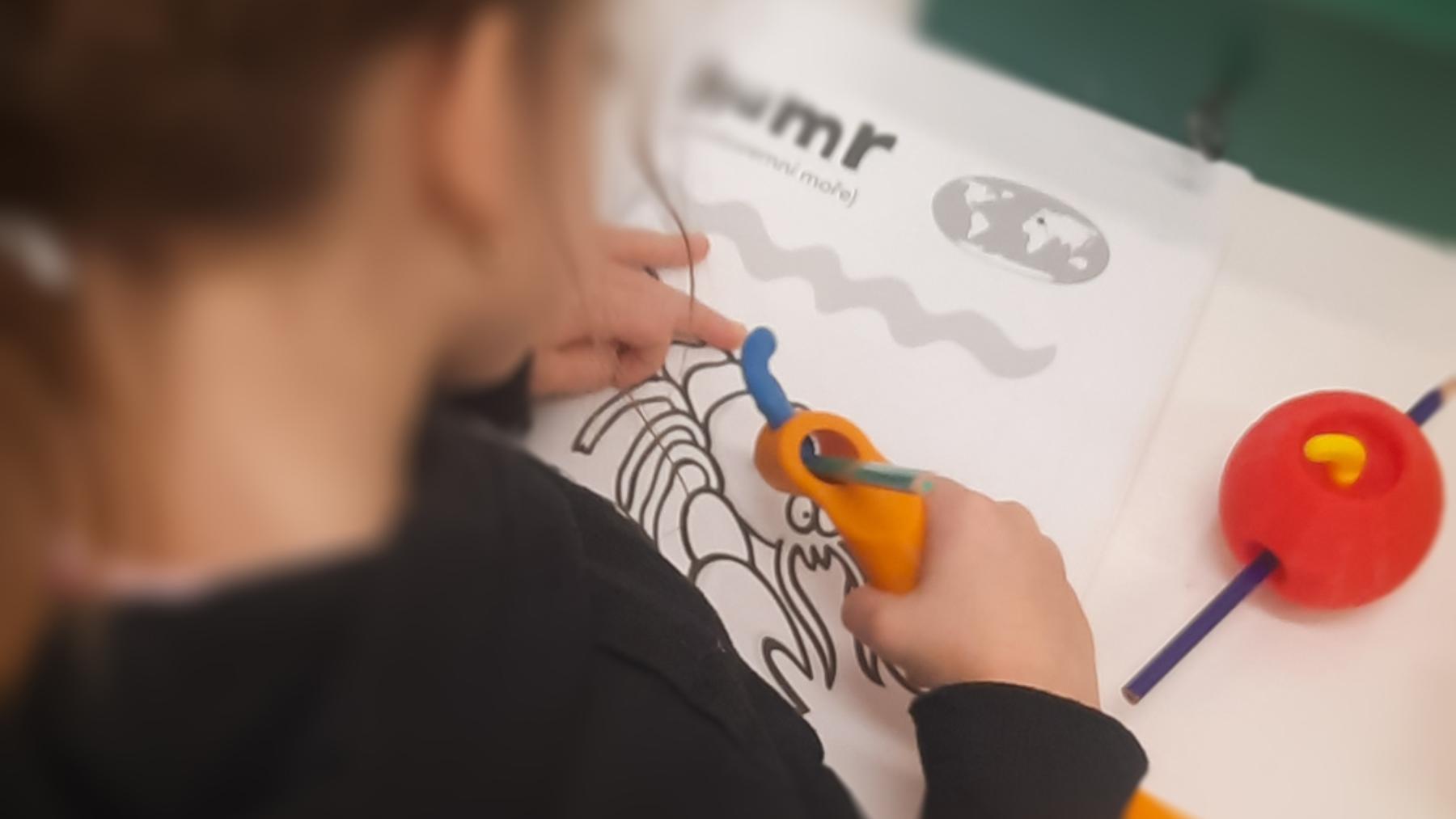
Without suitable aids, even ordinary activities can be much more difficult for some children than one might think. They find it harder to control their hand when drawing or writing, struggle to hold a pencil, and may also have difficulty manipulating small objects. Every such task requires more concentration, time and energy, which can lead to frustration, faster fatigue and less independence in everyday activities.
“The aids do not only help children practise specific skills or develop independence. Their impact on a child’s mental well-being is also very important. Children suddenly experience that they can manage something on their own. This gives them a sense of achievement and strengthens their self-confidence, which is truly priceless,” says Markéta Veselá, a special education teacher and rehabilitation worker at the Liberec nursery school for children with special needs.
Looking for a functional solution
This is why headteacher Lenka Pánková and Markéta Veselá decided to look for new aids. At first, however, they encountered a lack of understanding. It was only when the nursery school’s request reached CXI TUL that it gained the attention of people for whom precisely this kind of challenge makes sense.
Markéta Veselá described in detail to the 3D printing team the obstacles the children face during everyday activities and what could make these tasks easier for them. The discussion covered holding a pencil, developing a proper grip and manipulating simple objects which most children take for granted, but which here represent an everyday challenge. The nursery school also brought inspiration from its own research. Various attachments, grips and other simple aids found online were therefore placed on the table.
Playfulness matters
The aids designed by the developers at CXI TUL combine functionality with an attractive appearance. They are colourful, visually appealing and naturally encourage children to use them.
“Colourfulness and playfulness play a surprisingly important role. The aids naturally attract the children. They want to explore them, touch them, choose colours and materials. As a result, they are much more motivated to use them. Activities that used to be unpopular or difficult for them gradually become more natural and sometimes even more sought after,” explains Markéta Veselá.
Some of the new elements are designed to be attached to the hand or palm. This can help children in situations where they are unable to grip an object firmly on their own. These may seem like small things from the outside, perhaps not revolutionary at first glance, but in a child’s real life they can make an enormous difference. Less frustration. Greater independence. A better opportunity to take part in activities that others consider completely ordinary.
Aids that bring children together
According to Markéta Veselá, one of the major benefits of the new aids is also their versatility. “It is not just a pencil holder. We can also insert a paintbrush, a marker or even a spoon into it,” she adds.
She says the change is visible in everyday work with the children. They return more willingly to activities that used to be difficult for them, stay engaged for longer and are more eager to try new things. Their skills therefore improve gradually and naturally.
When using the aids in practice, the nursery school was also surprised to find that they attracted not only the children for whom they had originally been intended. Other children also pick them up, show them to one another, notice the details and choose “their favourite” one.
This helps create a naturally inclusive environment. “Thanks to the aids, children work together with the others, feel fully included, and this naturally supports the inclusive environment we dream of not only at school, but across society as a whole,” confirms Markéta Veselá.
A cart for mobility training
The nursery school and the CXI TUL team are now building on their successful cooperation with another project. Researchers are currently working with the nursery school to complete a special cart for mobility training for children aged 1 to 8 with movement difficulties.
“We do not aim to replace fully fledged professional solutions, which are very expensive. We are trying to produce an affordable alternative that can even be printed at home on a standard FDM printer. It is very rewarding to see how 3D printing is getting closer to people and helping them,” concludes Pavel Francírek from CXI TUL.
The whole story confirms that even a small aid can have a major impact: helping a child master a movement that only yesterday was too difficult for them.