ZF Automotive’s Jablonec plant wants to test machine vision on an assembly line, while industrial equipment supplier FOXON plans to visualise data from electricity meters. These are just some of the challenges awaiting participants in TechStarter 2027, a competition programme organised for the third time by the Regional Development Agency and the Liberec Region. The programme gives students at secondary technical schools the opportunity to work on problems that companies are actually dealing with.
September is all about being back in the classroom. From October, however, several dozen students will add regular visits to manufacturing companies across the Liberec Region to their school schedules. Working in teams of two or three and under the guidance of experienced mentors, they will tackle specific real-world assignments.
“TechStarter brings something to technical education that is difficult to simulate in the classroom – a real problem from a real workplace. Students have to work with company employees, propose a solution and, in the end, defend their approach. This kind of experience shows them how they can apply what they learn at school in practice and that their ideas can have genuine value for companies,” says Jitka Skalická, Liberec Region Councillor for Education and Sport.
Six companies have submitted assignments for this year’s TechStarter. Alongside the aforementioned ZF Automotive and FOXON, they include pressure die-casting component manufacturer DGS Druckguss Systeme, security systems specialists Jablotron, family-owned engineering company Beneš a Lát, and crystal components producer Preciosa.
Students will present their results to TechStarter expert panels made up of company representatives at the beginning of next year. In March, they will then present their projects to a wider audience and receive their awards. The greatest reward, however, may be knowing that their idea could actually be put into practice in manufacturing.
And it would not be the first time.
Solutions that are already helping companies
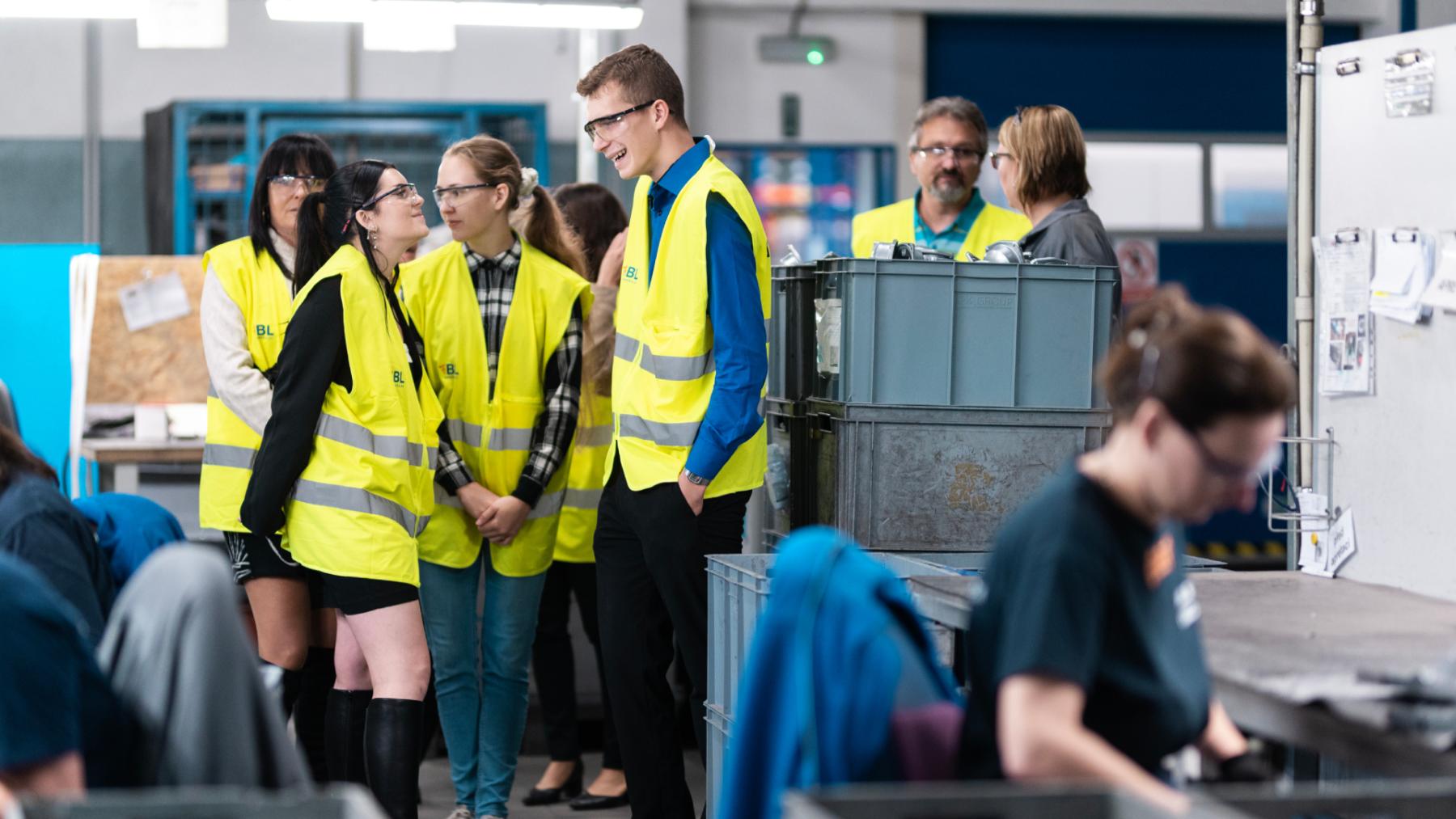
At the March awards ceremony for the second year of the programme, one of the ten projects presented was created by a team from the Integrated Secondary School in Vysoké nad Jizerou. At the Mimoň branch of engineering company Beneš a Lát, the students focused on optimising the logistics flow of products in the aluminium foundry.
“At the time, we were planning to install additional production equipment. We needed to save space and speed up the flow of material through production,” explains branch director Romana Zvolánková.
The students proposed changes to the placement of packaging units and the installation of monitors directly at production workstations. Unexpected circumstances prompted the company to accelerate the planned changes, meaning some of the students’ proposals were implemented even before the final presentation in March.
The most visible result of the project is the monitors installed in the production hall. “Employees used to come to our office to collect documents containing the technological procedures. Today, they can conveniently open them with just a few clicks directly at their workstation,” says Romana Zvolánková.
At the monitor, employees can also scan a barcode on the job traveller to record the completion of a production operation without having to leave their workstation.
“We used to process the job travellers once or twice a day. People were often waiting for additional parts and did not know which stage of production they had reached. Today, logistics, dispatch, sales and other departments can see all the information online. We didn’t put the students’ proposals in a drawer – we actually used them,” says Zvolánková.
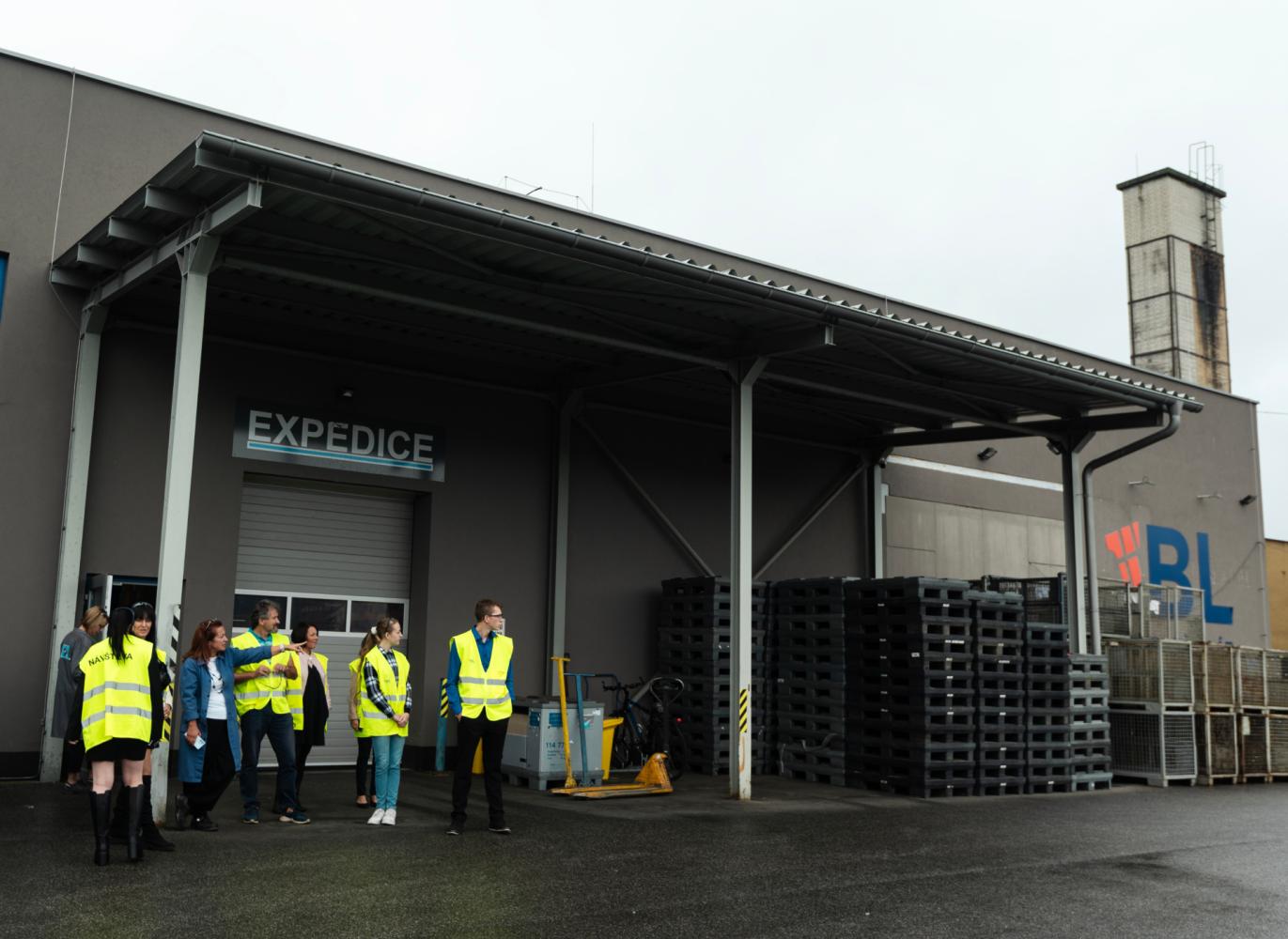
Another student idea is still awaiting implementation: roofing over the passageway between two production halls, which would create dozens of new storage positions for packaging units. “The students even calculated how many positions we would gain under different roofing options. They prepared it specifically for our needs,” Zvolánková says. The company is now working on the project documentation, structural calculations and construction costs for the shelter.
In Mimoň, the focus is on ergonomics and labour shortages
This year, Beneš a Lát is returning with a different assignment: modernising a workstation used for so-called finishing, where excess material and sharp edges are removed from castings before painting. The work is still carried out manually using files and grinders.
Two teams will head to the Mimoň branch. In addition to the “tried-and-tested” Integrated Secondary School in Vysoké nad Jizerou, students from the Secondary Vocational School in Turnov will also take part.
But the company’s cooperation with schools does not end there. The Mimoň plant has long offered work placements to students in fields such as mechanical engineering and mechatronics, helping the company to develop future employees. During company visits, students often meet graduates of their own school – while those graduates, in turn, meet their former teachers.
For the Mimoň plant, the TechStarter competition programme was its first experience with cooperation of this scale. According to Romana Zvolánková, the company initially did not know what results involving secondary school students might bring. The proposals that were successfully put into practice therefore came as an even more pleasant surprise. “I think it was also rewarding for them to see that we didn’t just put their work away in a drawer, but actually used it. They came away with experience of a real, tangible result.”
This experience also reveals the deeper purpose of the competition. Companies need to show technically educated graduates why it is worth staying and working in the region after they leave school.
“At school, you are given an assignment that the teacher already knows the answer to. In TechStarter, you are given a problem that even the company does not know how to solve. And that is precisely why it makes sense. Students get hands-on experience with real manufacturing, companies gain a fresh perspective and sometimes even a solution that they actually implement. And if young people discover along the way that interesting technical jobs are available right here in the Liberec Region, everyone wins,” adds Edvard Kožušník, Statutory Deputy Governor for Economic and Strategic Development of the Liberec Region.