Every lap completed on a track leaves a trace in the data. But knowing speed, acceleration, steering input or tyre load does not make the car faster on its own. RaceQ, a start-up developing software for simulation and analysis of racing car dynamics, wants to show teams where the graphs hide opportunities for faster cornering. And also how simulations can help save up to seven-figure sums spent on renting race tracks.
On a circuit, racing often comes down to tenths of a second. Catching and overtaking a rival may look from the outside like a result of courage or engine performance. In reality, however, the decisive factors are often the car’s geometry, chassis behaviour and the ability to work with telemetry.
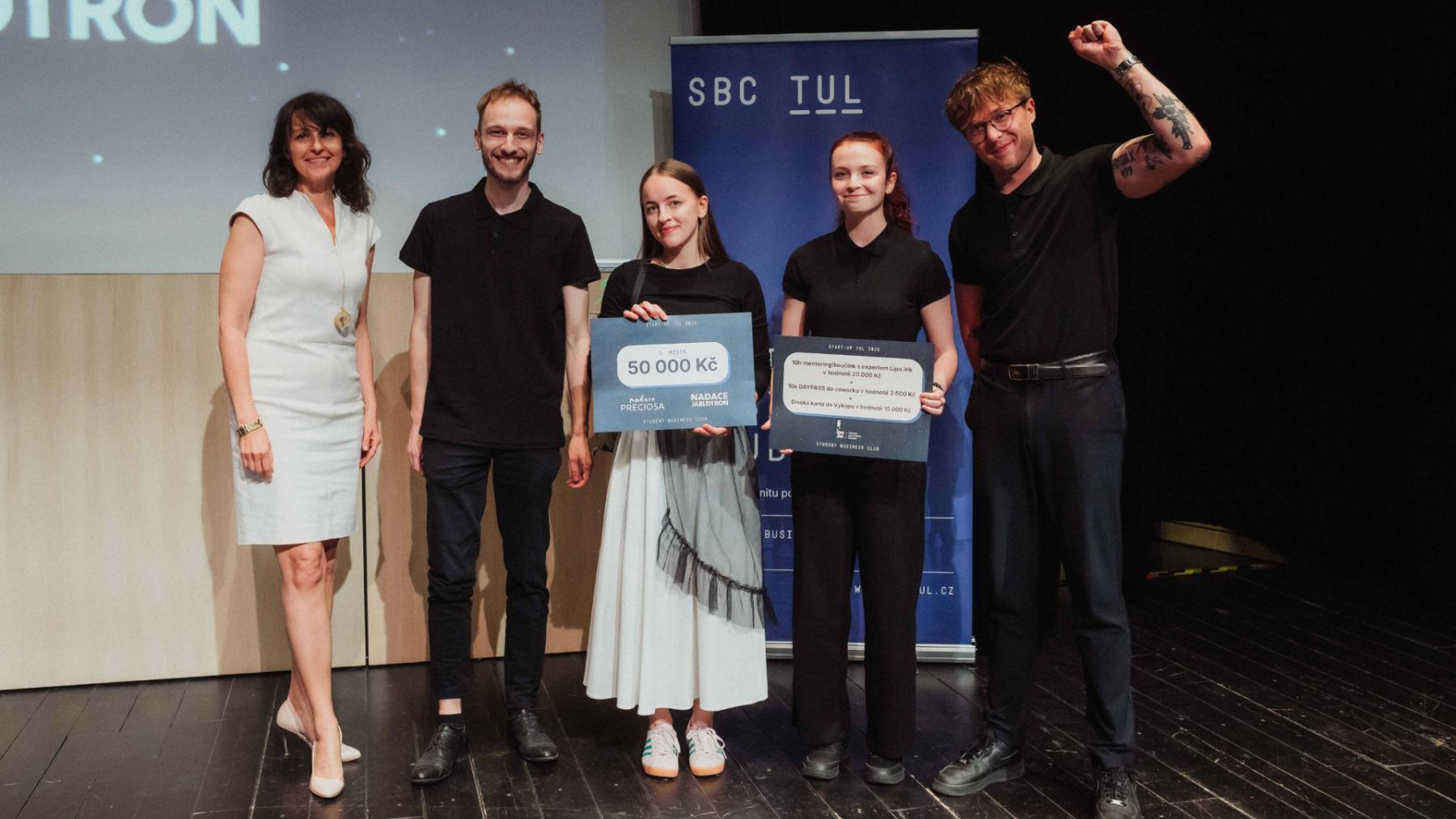
These “invisible” parameters are exactly what the start-up RaceQ aims to help race car engineers understand in the future. The team took first place in this year’s Start-up TUL competition. Behind the project are Patrik Skýpala, Florian Klein, Magdalena Jirsová and Michelle Jandová - students from three faculties of the Technical University of Liberec.
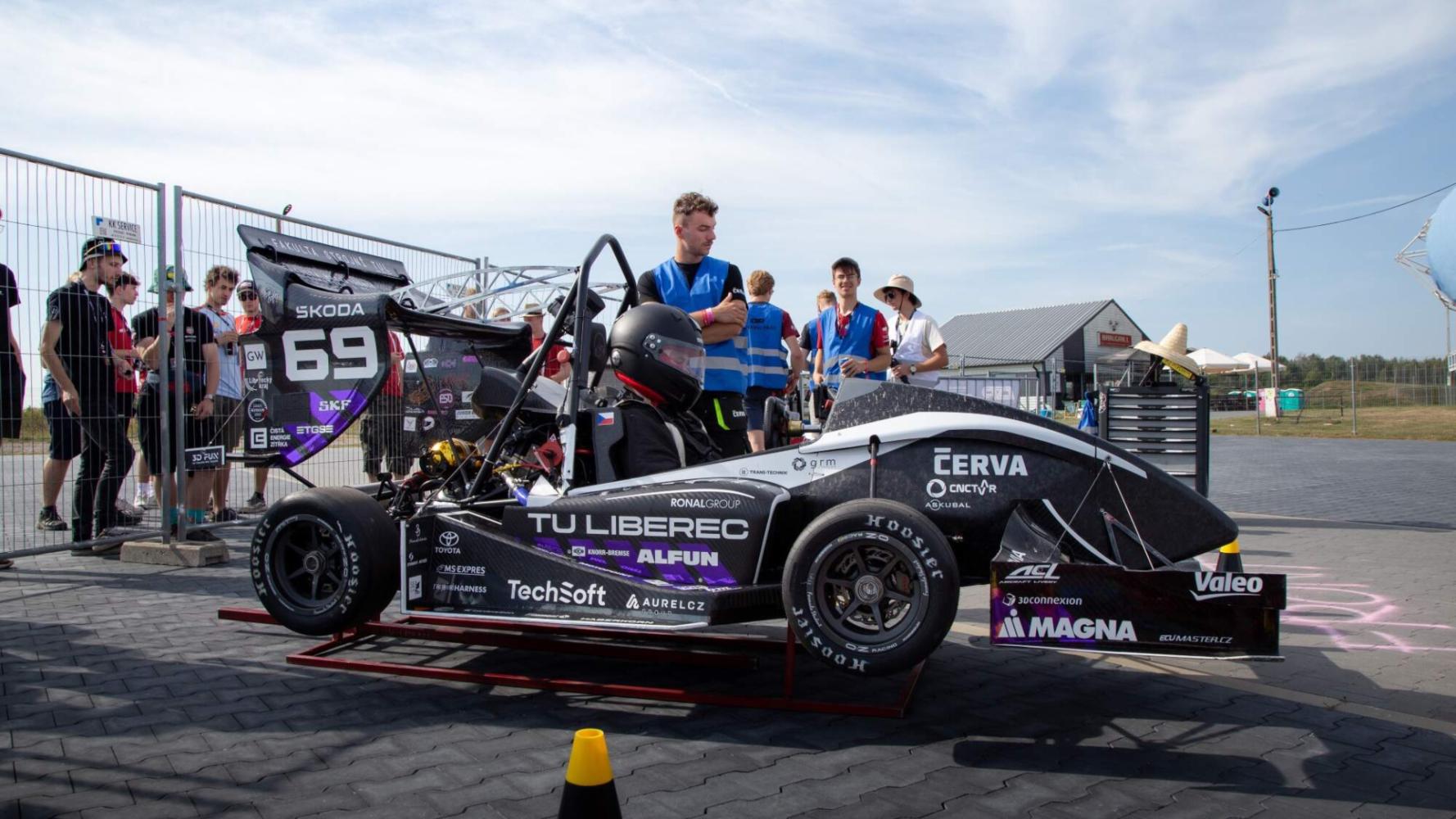
They draw on their experience with Formula Student - and from an environment where it quickly becomes clear who can truly work with measured data.
“I would describe it as software that helps racing teams and drivers find lost tenths on the track. Whether that means vehicle setup or better use of the car’s technical parameters. In short, it helps get the maximum out of the car,” says Florian Klein.
Unique data and less blind testing
One of the key variables RaceQ tracks is tyre grip: how much of the available grip the car actually used in a given part of the track, and where there was still room left. “This is a parameter you do not get from standard telemetry. And it can be used as the basis for a range of decisions,” Klein emphasises.
A typical example? Cornering. If the calculation shows that the tyre could have handled more from the perspective of available grip, the team can consider braking later, entering the corner faster or working with the car differently. A graph showing speed and calculated grip also reveals where the margin was: in the driver, in the car setup, or in both.
“The outputs depend heavily on the quality of the inputs. The more precise data, sensors and information about the car a team has, the more accurate the decisions the software can provide,” the authors of RaceQ explain. “So it is also about how well they know their own vehicle.”
The second major strength of RaceQ is scenario simulation. A team can take data from a real run, mathematically adjust the car’s parameters, and compare how the vehicle’s behaviour would change with different geometry or different spring stiffness.
The goal is not to replace on-track testing. The software helps decide what is actually worth testing on the circuit. Instead of trying one adjustment after another directly on the track, a team can first simulate some of the variants on a computer.
The application filters out vehicle setups that do not make sense according to the model and leaves only the options with the greatest potential. Expensive time on the track can then be used for targeted verification of specific hypotheses. “We go through ten variants on the computer, choose one, and only then test that one. The time spent on the track is then much more productive. And cheaper,” says Skýpala.
To give an idea: ten minutes of driving a racing car on a rented circuit can cost around one to two thousand euros. A driver may spend half an hour or more on the track. The cost of a single testing block can therefore easily reach well over one hundred thousand Czech crowns.
A major added value is that everything works within a single interface. RaceQ connects graphs, the track map and track geometry, the tyre envelope, grip utilisation and model outputs on a shared timeline. When the user moves through one view, the other parts of the interface relate to the same moment. This means the team does not have to manually piece together connections across several different tools.
From Formula Student to first collaborations
RaceQ is built on the practical experience of the whole team. Skýpala spent three years as head of the chassis section in Formula Student and founded the vehicle dynamics section. He has been working on calculations related to car setup for several years, and because conventional software was slowing him down, he gradually began creating his own tools.
Florian Klein brought technical know-how to the project, along with the ability to turn individual ideas into more complex software.
The team is completed by Michelle Jandová, a former racing driver who brings the driver’s perspective: what they actually need to understand from the data, and how information should be presented so it can be used in practice. Magdalena Jirsová is responsible for the visual identity, brand and communication.
Patrik and Florian openly admit that they can easily get lost in calculations, models and interface details. “We always say: Majda, we have to be able to explain this even to you,” Florian says, describing Magdalena’s role in helping them look at the project through the eyes of someone outside the purely technical world. Feedback from Michelle works in a similar way. “Do you really think a team will use the application? Or that everyone will understand it right away?” Patrik recalls her asking at a moment when she reminded them that precise calculations are not enough - the output must also be easy to understand.
They did not have high expectations when entering the Start-up TUL competition. “We found out the competition existed and said to ourselves: we want to do this anyway, so let’s try it. Maybe we’ll learn something,” Klein recalls of the initial feeling, which soon turned into enthusiasm.
For Patrik and Florian, taking part in the competition quickly pulled them out of purely development-oriented thinking. “The business side is actually the complicated part of the whole thing. Over three months, we moved from a technical idea to a stage where we are dealing with specific customers, what exactly we will deliver to them, and how we are going to do it,” they agree.
The product is emerging through services
Originally, the four-member team wanted to sell RaceQ mainly as a software licence. But entering the market showed them that simply saying “here is the tool, buy it” was not enough. Today, the team is therefore opening doors more through specific services: preparing analyses, building computational models and helping teams solve concrete problems related to vehicle setup.
For now, Skýpala and Klein are not naming specific clients. In motorsport, data about car setup is sensitive, and teams naturally protect it. Their plans for further growth are similarly cautious. Skýpala stresses that the short-term priority is not sales alone, but credibility within the field: “Our goal for this year is not primarily sales-oriented. We want to build credibility, a name, and show that we have collaborations and results in the industry. We believe sales will follow afterwards.”