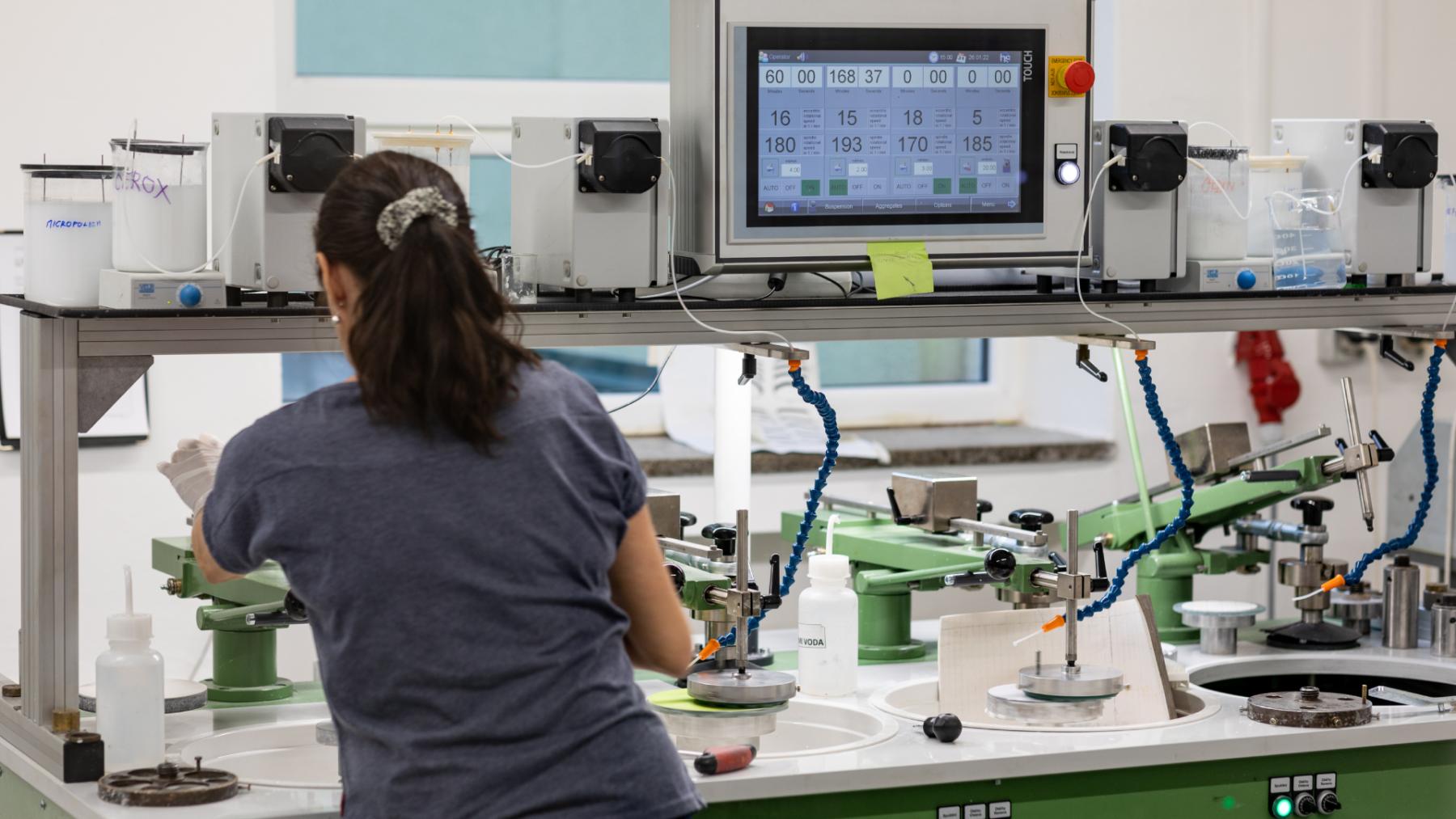
She’d been drawn to space since childhood. She dreamed of becoming an astronaut, and later—more down-to-earth—a doctor. But at the last minute she changed course and graduated from the Faculty of Mechatronics, Informatics and Interdisciplinary Studies at the Technical University of Liberec. Even so, she eventually found her way back to medicine—by a roundabout route.
“The turning point came when, while working on my thesis, I encountered research with a direct impact on human health. Suddenly I realized that science doesn’t have to be abstract—it can genuinely save lives. And that completely consumed me,” says Markéta Hujerová (née Klíčová).
In the end, the talented scientist devoted not only her career—but, in a sense, her personal life as well—to that work: developing a nanofiber patch designed to help prevent serious complications after colon surgery.
A safeguard against life-threatening complications
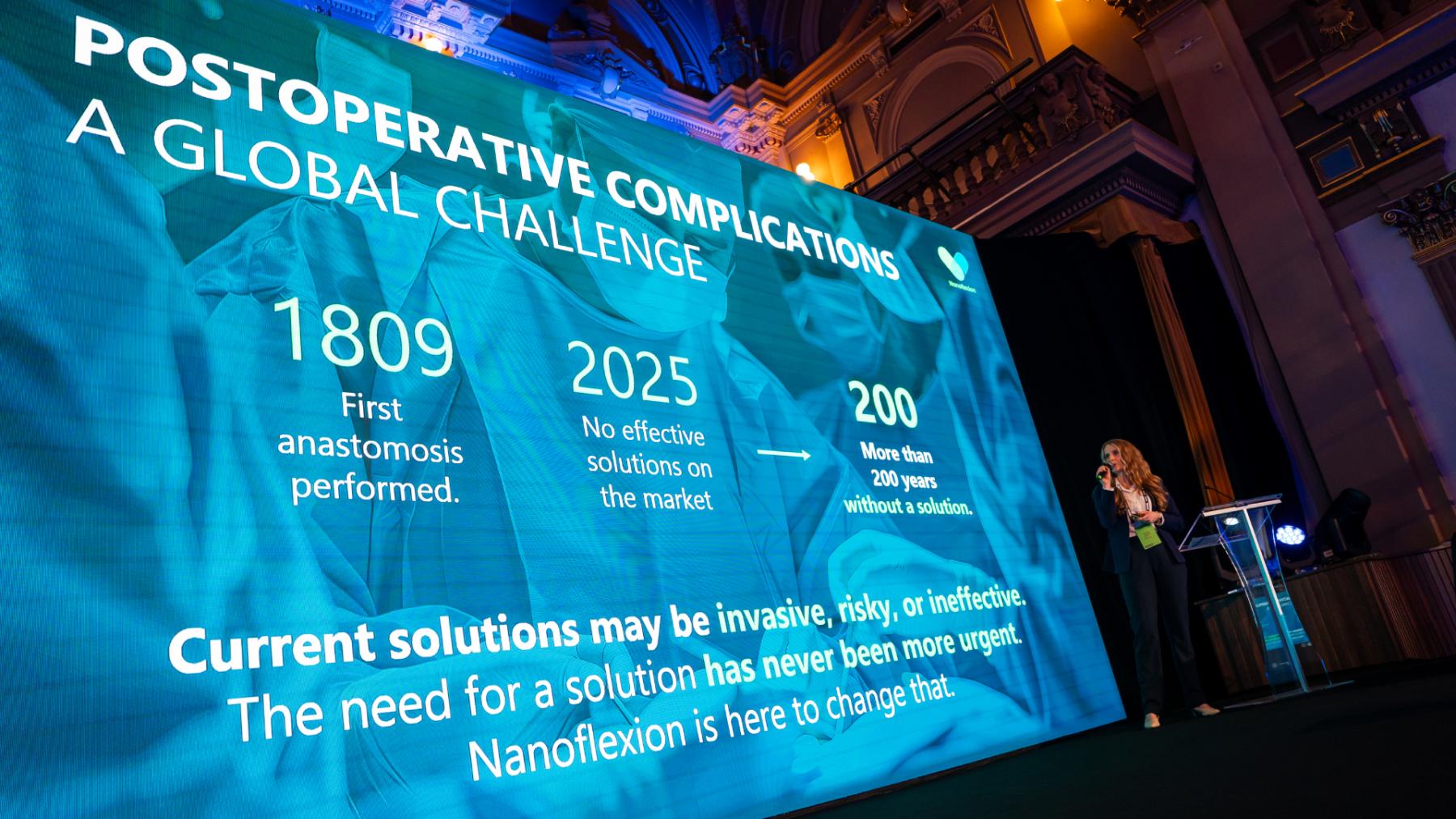
Research into nanofibers for gastrointestinal applications absorbed Markéta for several years. What drove her forward was openness—and doctors’ pleas. “They came to me saying they had nothing to prevent colon adhesions or leakage of its contents into the abdominal cavity,” she says.
The first complication, among other things, leads to chronic pain. The second can lead to sepsis—blood poisoning—which, despite the advances of modern medicine, still kills up to 22% of affected patients. The nano-patch works as a biological barrier and, thanks to drugs bound to it, also suppresses inflammation and promotes healing.
What became Markéta’s engine was the fact that research doesn’t have to end with a publication—it can translate into real impact, a real change in patient care. “For a long time I thought someone else would come along and take the idea further. But then I realized that if I didn’t take it into my own hands, all that effort would stay in a drawer. Nobody else is going to do it for me,” she recalls.
At first, the idea of entrepreneurship made Markéta uneasy—both because of the sheer volume of new knowledge and the responsibilities involved. Today she knows those fears were exaggerated, and she has gradually begun to enjoy the entrepreneurial ‘ride’. “I’m still humble, but it’s not fear anymore. Fear is limiting.”
The first person she confided in about the idea of starting her own startup was her husband. “He’s my number-one fan. He told me, ‘You’re finally on your path. That’s what you’ve always wanted—to get the patch to market and help people.’”
Support from loved ones and respected colleagues was crucial. When she discussed her idea with clinical partners in Pilsen, their reaction surprised her—and encouraged her at the same time: “They didn’t ask ‘if’, but ‘when’. And throughout it all, Professor Václav Liška has been helping me; he was there at the birth of the nano-patch idea,” Markéta explains, describing the spin-off’s beginnings.
This term refers to a newly established company built on specific know-how and translating it into commercial practice. It typically works closely with the research organization where the idea originated. In Nanoflexion’s case, that organization is the Technical University of Liberec, where the spin-off is based and from which it draws expert backing and support.
Back to zero at thirty
It became clear early on that academia and business run at different speeds and play by different rules. “Science needs time. Business pushes for speed, decisions, and clear milestones. These two worlds have completely different dynamics, and sometimes it’s hard to keep them in balance.”
Her experience and contacts from research stays abroad also paid off. A major source of inspiration for Markéta was Dr. Richard Novak of Harvard Medical School, who had himself made the transition from academia to his own entrepreneurial venture. And thanks to a study stay at the University of Cambridge, the young scientist had the chance to present her breakthrough in colon surgery at a biomedical conference in Oxford.
The founder found a key partner in the biotech-focused startup incubator i&i Prague: “Besides legal advice and contacts, I needed a ‘translation’ between the worlds of science and business—understanding how a good technology becomes a product.”
Choosing to launch her own spin-off meant leaving a scientific career that was already taking off and giving up security. “You hand in the company car and laptop and, at thirty, you’re back to zero. Suddenly everything rests on you. And you’re responsible not only for yourself, but also for, say, a colleague who leaves a stable job because of you. What if the money runs out in a year? That’s a huge commitment—one you often only fully grasp in hindsight,” says Markéta Hujerová.
With all of that, it’s hard to reconcile personal life. “I’m away a lot; there’s less time for family and friends. Balancing the role of scientist, founder, and at the same time a partner or a daughter isn’t easy. But I also know that if I hadn’t tried, I’d never be satisfied with myself,” she adds.
What does she say to those considering a similar path? “There’s no reason to play it safe. If you believe in your idea, go all in. Success isn’t reserved for someone else—if you put honesty and purpose into your work, you deserve it too.”
TechCare 2026
Join us to explore the benefits of artificial intelligence, robotics and digital innovations in healthcare, community-based support, care for older people and smart devices. Meet the experts who are shaping the future of healthcare.
Join us at TechCare 2026
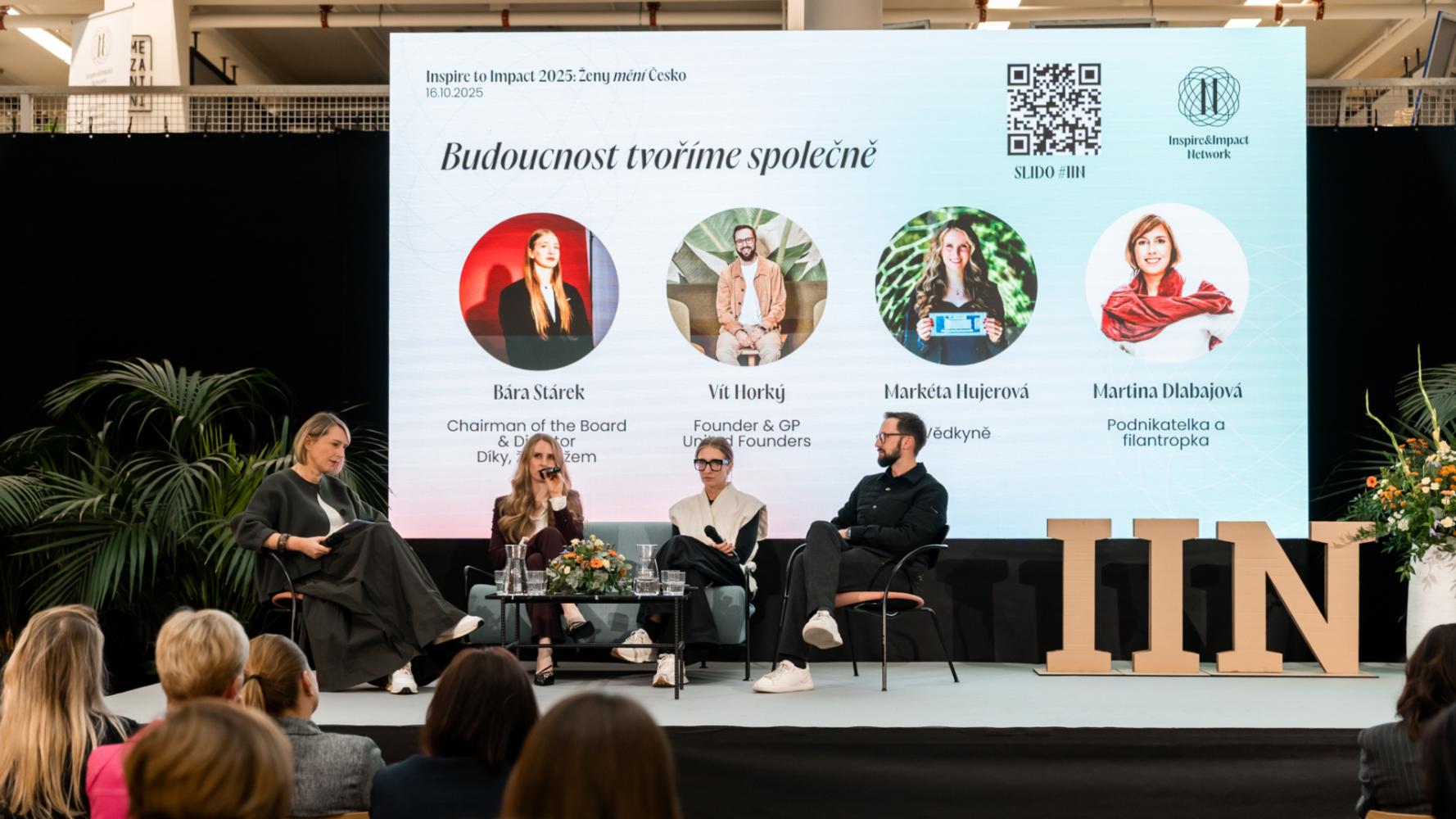
Markéta Hujerová will speak about nanofiber patches at TechCare 2026, alongside other speakers offering fresh perspectives on how science, technology, and healthcare can connect.
The conference takes place on Wednesday, 25 February 2026, from 10:00 to 18:30, at the Vratislavice 101010 Cultural Centre, and is organized by the Regional Development Agency together with the Science and Technology Park of Palacký University Olomouc and other partners. The event is held under the auspices of Edvard Kožušník, Statutory Deputy Governor of the Liberec Region for Economic and Strategic Development.